
noodsletter #.0061
Happy New Year! Thoughts on last year, and waste.
Hello!
You’ve received this email because you’ve signed up for noodsletter. Thank you.
All the recipes ever published in noodsletter have been archived in the very first noodsletter, which you can find here.
Going to be talking about the cookbook-year-that-was, and second stocks and “waste.”
Order my cookbook, Homemade Ramen, now!
Please consider becoming a paid subscriber!
Book Bit
It is hard for a writer to call an editor great, because it is natural for him to think of the editor as a writer manque. It is like asking a thief to approve a fence, or a fighter to speak highly of a manager. “Fighters are sincere,” a fellow with the old pug’s syndrome said to me at a bar once as his head wobbled and the hand that held his shot glass shook. “Managers are pimps, they sell our blood.” In the the newspaper trade, confirmed reporters think confirmed editors are mediocrities who took the easy way out. These attitudes mark an excess of vanity coupled with a lack of imagination; it never occurs to a writer that anybody could have wanted to be anything else.
-From “Harold Ross, the Impresario,” in turn from Just Enough Liebling, an anthology of works by A.J. Liebling.
Homemade Ramen!
Homemade Ramen came out in October, marking the end of a five-year journey of writing in frenzied spurts, the doldrums between these spurts punctuated by making a whole lot of ramen, and, if we’re being honest, a lot of twiddling my thumbs. There’s a lot of waiting involved in book production; waiting for inspiration; waiting for edits; waiting for…I honestly have no idea what some of the waiting was for…so, just waiting; waiting for the damn thing to go on sale. And then all of a sudden it’s over, the book’s out, and there’s more waiting. For what? Success, I suppose; news that Adam’s curse has been, finally, lifted; freedom; reprieve.
It didn’t really shake out like that; it doesn’t, for anyone, as far as I can tell, and it was always a silly dream, something I held onto because of a lack of imagination more than anything else. I received a message from an old friend a few weeks ago: “So, when do we find out if it was successful?” A great, annoying question. Yes, when? When will that be?
By any reasonable measure, the book has been—is—a modest success. Not that I’ll ever see royalty checks with sums larger than single digits. (Single digits would be—is—very optimistic.) It made some of the year-end lists; here’s a list of the year-end lists it made:
A perfectly respectable showing, with some truly surprising nods from quarters I’d have never expected. (I did not expect “the Minimalist” to be into the book, although he did describe it as a “cookbook for insane people”—which, fair enough.)
Of course, the book being published underlined Lucretius’s thoughts on endings and beginnings, since it kicked off a flurry of activities that we anachronistically call a “book tour.” I traveled around, made some ramen (as described in the last noodsletter), filmed YouTube videos (with ChefSteps, with Kenji), went on some podcasts (Milk Street, Special Sauce), did a WNYC hit. All this, of course, while fulfilling my obligations at my day job (listen, if you subscribe to this newsletter and don’t subscribe to ChefSteps, I don’t get it; we have been firing on many multiples of “all cylinders” all year. I can say without any of my customary knee-jerk humility that the ChefSteps crew crushed it in 2025.)
All of which is to say it has been exhausting.
It is, for the most part, over, thank god. But as I keep reminding my wife, it’s not over over; I will try to do more events, as I can; I have to maintain a somewhat consistent social media posting strategy to help with book sales, which now seems to require making videos—the amount of free labor these social media companies wring from us poor “creators” is an atrocity. So, if you haven’t bought a book (yet, I hope?), know that you can, of course, pick up a copy wherever books are sold (except for the Barnes and Noble on Atlantic Avenue, which I went to in order to offer to sign any copies they might have, and they didn’t have any…humiliating.) Also, a reminder that the Japanese Pantry is selling signed copies of the book, and a bundle of fine Japanese pantry ingredients that are amazing for making ramen.
I started out writing noodsletter with the express charge to never apologize for anything, but I’ll apologize here; I have been remiss. I have simply not had the energy to stay organized. It may seem like a little thing to scribble a newsletter a week, and it is, and yet I have been unable to. Yes, I have been busy; yes, my day job is technically challenging and mentally exhausting (and yes, it’s just producing recipes, faw faw); yes, I had all this book stuff to juggle. But none of these excuses—for that’s what they are—are particularly convincing. I could cite some of the health concerns I was unexpectedly and terrifyingly faced with in the final months of 2025 because of some myopic radiologist, but since I’m fine—like, entirely fine! The radiologist needed a vacation, I think—they seem like a bad excuse, too.
So I’ll do better. I’ll write more. Because, ultimately, noodsletter was always a place for me to just shitpost as I like, unconstrained by what I “ought” to be doing. I’ll try to keep that in mind when I open up another draft and think my god what have I done.
Which brings us to this next bit of ramen insanity…
The YouTube Peanut Gallery; or, How I Learned to Love “Waste”

As mentioned above, we (ChefSteps) put up a video of me making a kind of crazy bowl of ramen on YouTube—the “Ultimate” Shoyu Ramen—and there were quite a few commenters who were concerned about the amount of “waste” involved in the recipe. (Here’s a representative one, in spirit, if not hysterical tone: “can you still use the meat used for stock for other things like sandwiches? I feel like it’s a huge waste to throw them out.”)
I’m sympathetic to concerns about waste—like anyone perpetually living on the edge of homelessness because they choose to pay New York City rent, wasting food is anathema. However, I struggle with the idea that chicken wings and ribs that have been hammered in a pressure cooker to produce a very fine stock constitute “waste” if you don’t repurpose it, let alone a “huge waste.”
That “huge” really gets under my skin. Technically, you could chew the hammered meat and derive sustenance from it; you could also expend a bit of effort and make that pasty meat taste kind of good by, say, frying some aromatics and spices in a fair amount of fat and folding the meat paste in. (Iida Shoten, the ramen shop I cribbed the triple-stock idea from, uses the blasted meat to make a Japanese curry for staff meal; my soup wizard colleague, Tim Chin, did something similar with his incredible lamb noodle soup.) There is, of course, the option of repurposing that stuff to make a second stock, a topic I have covered on Serious Eats and, more expansively, in my cookbook.
But what I want to emphasize is that none of these efforts constitute a reduction in “waste.” They should be viewed from the other side of the equation; they’re really a way to repurpose stuff that would otherwise naturally be thrown away, like the papery skins of onions, carrot peels, or saving a tea bag to make a second cup of weaker tea. Which is to say, in my view, it’s not a waste to throw out meat you’ve used to make a stock. “Waste,” to me, is throwing away a chicken carcass after you’ve removed the breasts and legs and wings, not neglecting to pick every last bit of digestible protein from a picked over chicken wing.
I’ve been thinking a lot about this issue, and I think it deserves a little discussion, and I’ll outline some of the reasoning behind the suite of recipes on ChefSteps and what we chose to include or omit.
The first thing that’s worth noting (and this is noted in the recipes in various places—there is a wealth of information in every one of our recipes, much of it unnoticed or unloved, because…well I don’t mean to be mean, but it does seem like the YouTube commentariat are functionally illiterate; if it does not take place within the confines of the runtime of the video they’ve clicked on, it may as well not exist anywhere in the world) is the choice of animal parts used in the stock recipe.
We spend a lot of time thinking about what the average home cook has access to; the fact that I can find chicken and pig’s feet in my local grocery store in Brooklyn isn’t representative of the United States as a whole. In my kitchen, I almost always use chicken carcasses left over from butchering whole chickens, pork neck bones, chicken feet, and pig’s feet for stocks—all economical cuts that have limited utility beyond making stock. (This is not knock on braised chicken feet or pig’s foot terrines—there is a pig’s foot terrine recipe in my book!) But what if you can’t find these cuts in your local store? You’re out of luck, and you’ll have to figure out a substitution. (If you already know how to make stocks, you could figure it out, but you also don’t really need a recipe or its more pedantic instructions to make a ramen stock.)
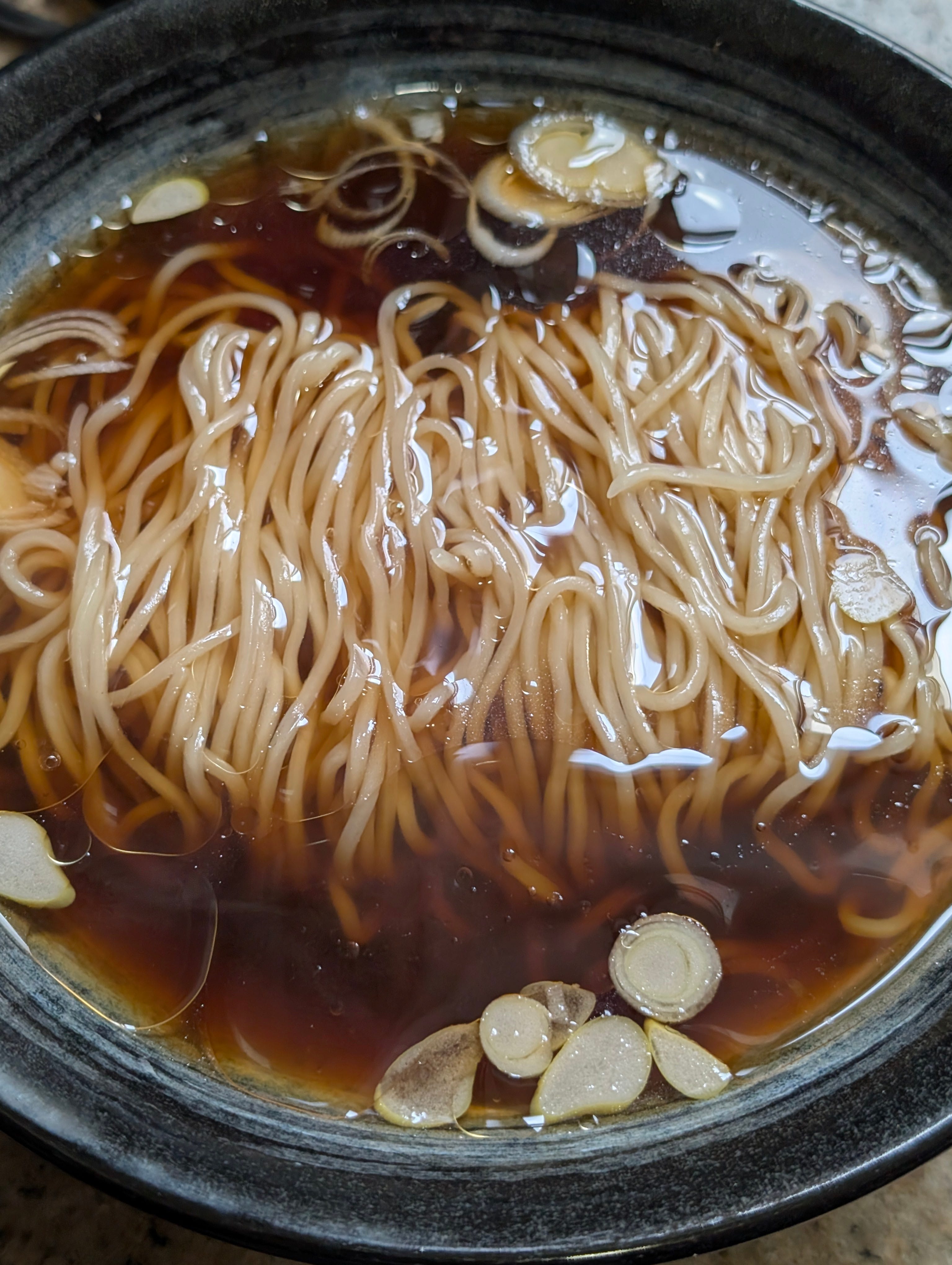
Couple that with the fact that we were doing a big pitch—the “best” or “ultimate” ramen stock—and we needed something that could be dialed in and reproducible. My solution was to pick animal parts that were both widely available—chicken wings and whole spare ribs are available at the vast majority of grocery stores in the country—and somewhat economical. Chicken wings, despite being a little expensive, make great stock because they have a nice mix of everything you want (fat, meat, collagen-rich skin and connective tissue). Whole spare ribs are also great for the same reason. Set out to make the recipe as written and shopping will be a breeze, and the result will be excellent—super gelatin-rich stock, with tons of flavor, and an ample amount of rendered fat to use in the final bowl of ramen.
The problem with both of these cuts is psychological, one that has to do with people’s expectations more than anything else. I don’t blame people for associating them with specific dishes that you really sink your teeth into; and I understand how turning them into a soup with far more servings than a flat of chicken wings or a rack of ribs can provide is, thus, seen as a waste.
There is, secondly, the idea of using those cooked chicken and pig parts for something else. Given how hard they’re cooked (an hour at pressure will hammer any meat, but it really does a number on thin, small pieces of meat and bones like ribs and wings), they aren’t all that palatable—what they mostly contain after pressure cooking isn’t flavor, but fat and collagen. Truly, the best thing they can be used for is to make a second stock, in the manner of remouillage or a niban paitan. So why didn’t we offer this option to people in the recipe (let alone in the video)?
There were two reasons. The first is that we were unconvinced that anybody would really go to the extra step of using these “spent” bones. The recipe calls for pressure cooking chicken for an hour, removing the chicken, then pressure cooking pork for an hour, steeping the stock, straining it, then (optionally) clarifying it before using it for ramen. That’s…a lot. Even the most hysterical YouTube commenter throwin’ peanuts would hesitate to go through all that and then tack on the things you need to do to make a second stock. And, ultimately, that’s where I land on it, too; 99 times out of 100, I will look at those spent bones and think I’ve done enough, I’ve wrung them for what they’re worth, and the extra effort to wring out that final bit of fat and gelatin would be better spent doing literally anything else, like staring at a wall.
Why? Because of the second reason: a second stock doesn’t taste very good, and you need to work rather hard to make it taste all right.
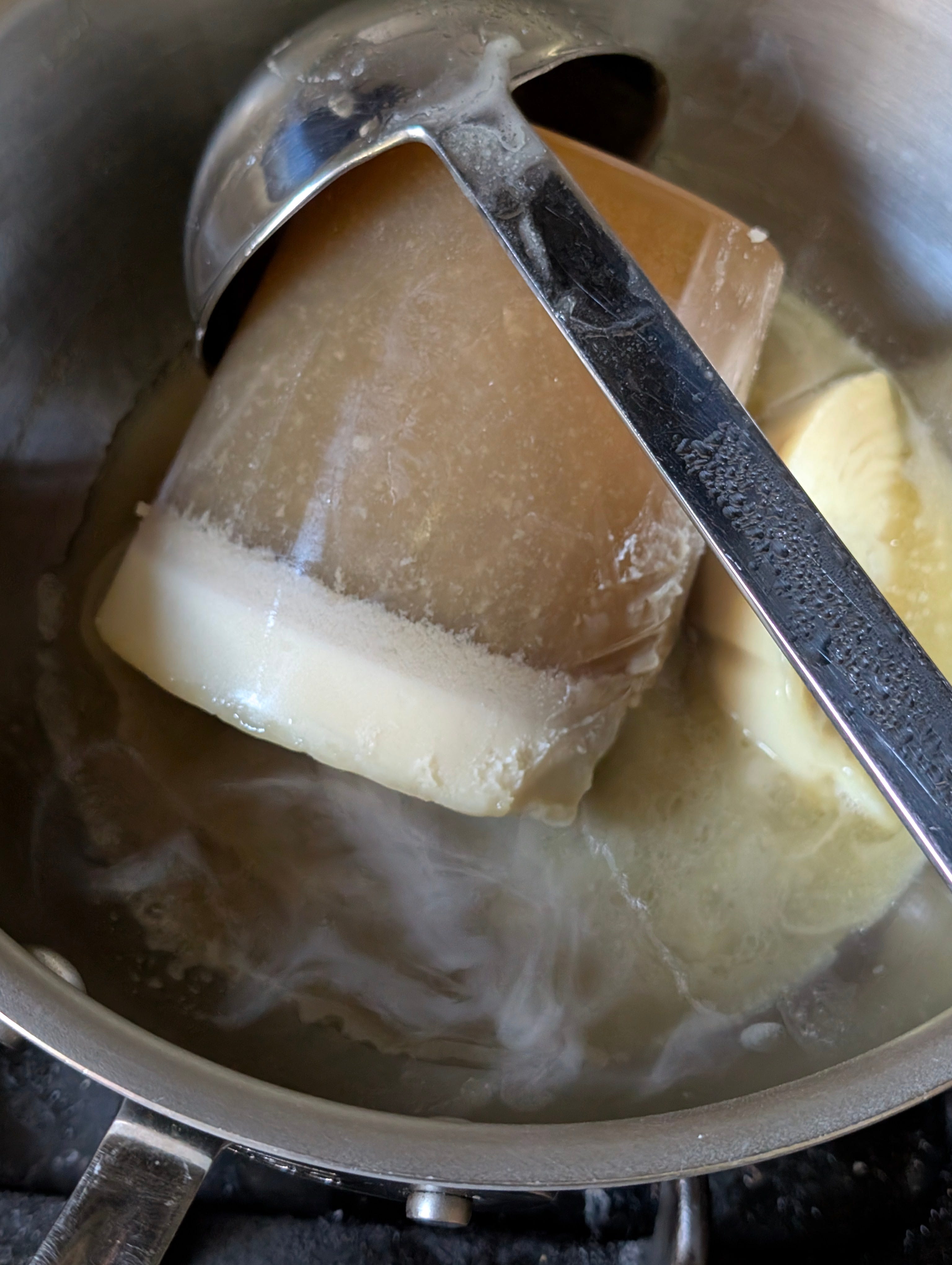
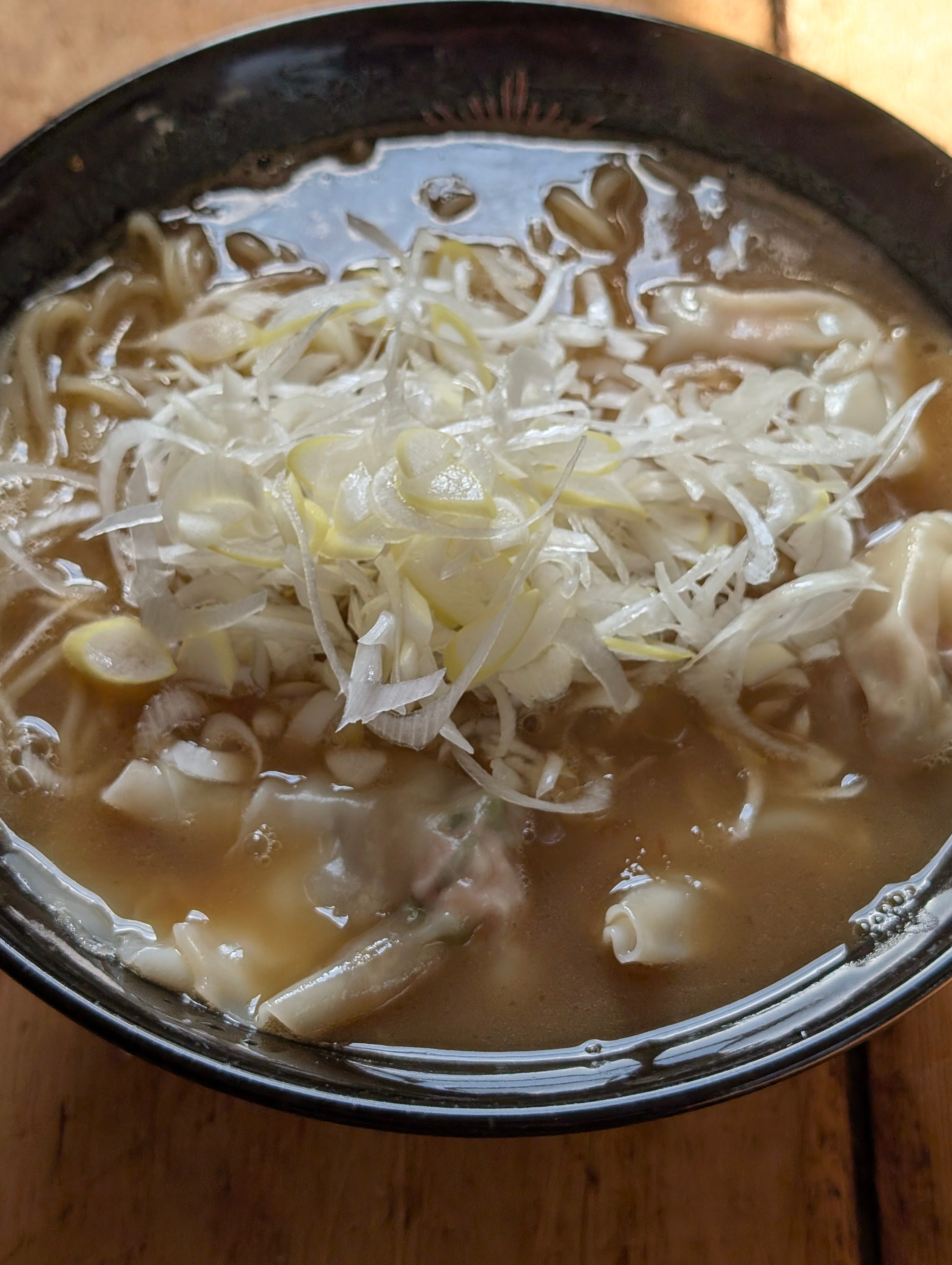
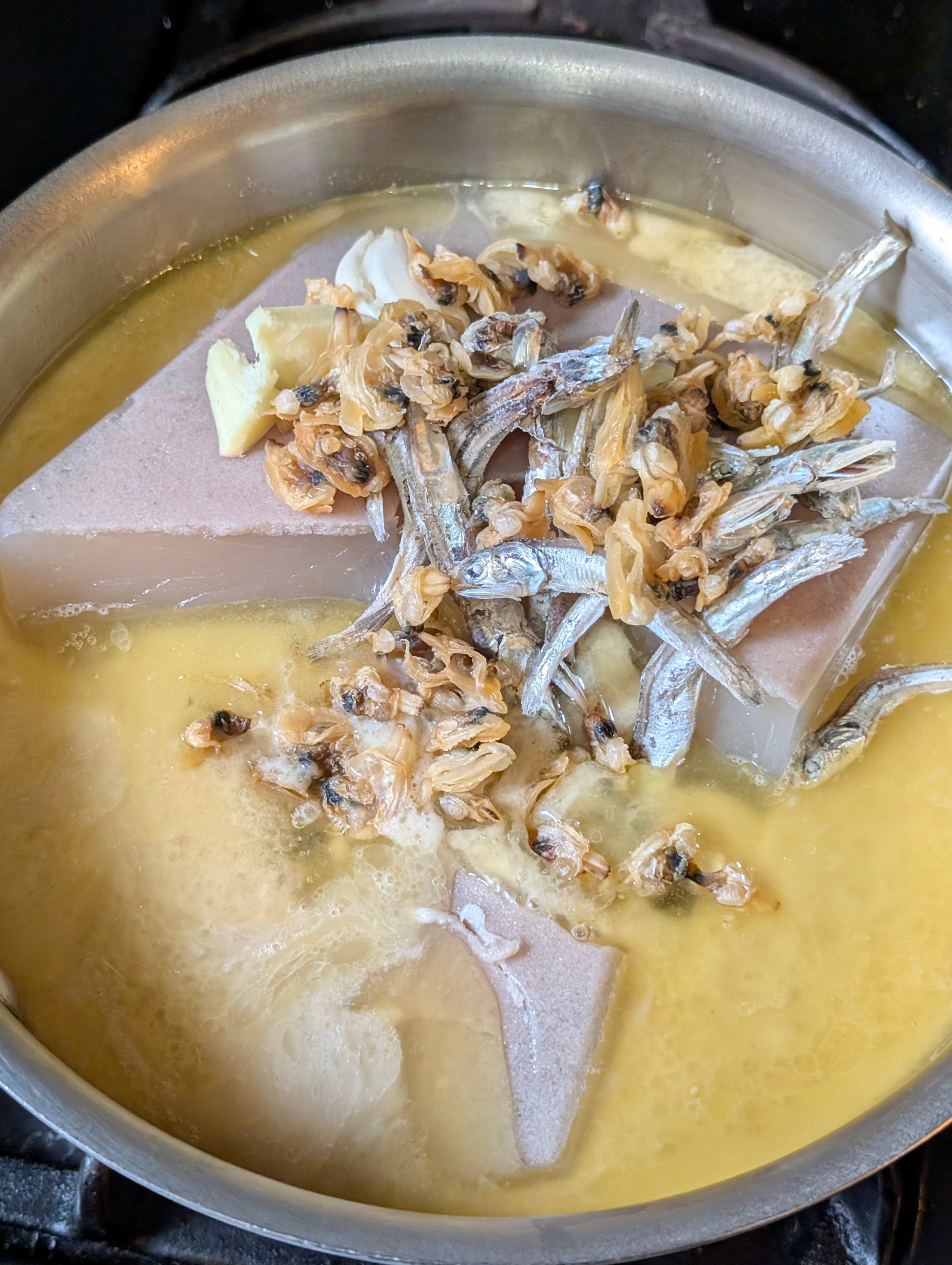
By way of example, I made a fortified stock the other day with the express purpose of making a second stock with the leftover pork and chicken bones. This stock was made with chicken feet and chicken backs, pork necks and pig’s feet, sort of in the same way as the ChefSteps recipe but the order flipped, as I wanted some plain chicken stock for Christmas dinner shenanigans. I followed the procedures I outline in the book—transferring the strained chicken parts to a Cambro and covering them immediately with water to prevent oxidation reactions that make reheated chicken taste weird; combining the chicken and pig parts and pressure cooking them with that water used to cover the chicken parts to capture as much leaked gelatin as possible; blending, straining, and steeping the stock with aromatics and kombu to improve its flavor; simmering the resulting stock with dried fish (clams and niboshi, and a handful of katsuobushi at the end) to make it taste amazing. Then I made a bowl of ramen with it. And you know what? It was pretty tasty—thick, creamy, unctuous, with a whole lot of dried fish flavor. (The snap at the top of this noodsletter is of this bowl of ramen—shoyu tare, lots of naga negi, also some wontons in there for good measure.)
But the total yield from all that was basically two and half bowls of ramen worth of emulsified stock. And it isn’t even great; it’s just pretty good. Every time I eat a niban paitan, all I can think of is how much better an ichiban paitan tastes—creamier, with more meaty flavor, and very little to no funk at all.
Now, I can think of ways to make it great, but they’d require more effort, and, crucially, for the peanut gallery, it would require more “waste”; the best way to improve a second stock’s flavor is to add fresh meat. (This is also true of niban dashi, or second dashi; you add a little extra fresh katsuobushi to give it more flavor.) In fact, the best way to use a second stock is to bolster the fat and gelatin content in a primary emulsified stock, which is the way (afaik) it’s used in ramen shops.
Writing that into a recipe for an “ultimate ramen stock” seemed silly; it would warrant its own recipe, or we’d need to shift the frame of the recipe to “the ultimate no-waste ramen stock recipe,” which would be very silly indeed. If we included in the recipe as is, we’d effectively be saying “here’s this amazing stock recipe, truly the best ramen stock, oh and you can make a quart or two of milky pork and chicken jelly that tastes sort of okay, too.”
After thinking about all this for weeks, I think my main answer to those worried about “waste” in that recipe (or stock-making) is quite simple: extend the cooking time. If you pressure cook chicken wings for two hours, rather than one, you’ll see more gelatin extraction and fat rendering (the flavor will be fairly similar); if you pressure cook pork ribs for three hours rather than two, you’ll see more gelatin extraction and fat rendering (the flavor will be fairly similar!).
For my part, I am completely content to toss these things in the trash. Just because I can make a palatable niban paitan out of them doesn’t mean I have to.
Can’t believe your ultra rich, gelatin laden ultimate stock for serious legit ramen uses a lot of meat. I mean how dare you, Sho.
I would extremely subscribe to a "all the stuff that isn't fit to print because people don't have the ingredients or the equipment or the technique to handle it" series. (Also loved the chefsteps video; youtube commenters are idiots.)