
Hello!
You’ve received this email because you’ve signed up for noodsletter. Thank you.
All the recipes ever published in noodsletter have been archived in the very first noodsletter, which you can find here.
Order my cookbook, Homemade Ramen, now! (IF YOU ARE GOING TO BUY IT, you should wait a couple weeks because there’s going to be a BLACK FRIDAY sale.)
(I may earn a commission if you click on Amazon links.)
Please consider becoming a paid subscriber!
Book Bit
The main purpose of that inventory, published in The New York Times, was to record the surviving “old-style” signs, which still existed in profusion; a new era of advertising paid homage to its ancestry. These were emblematic devices hung perpendicular to a building’s façade, like English pub signs, and their language of images drew on a tradition stretching back to the Middle Ages: druggists featured mortars and pestles; shoemakers, gilt boots; hatters, gilt hats; opticians, enormous eyeglasses; sporting-goods dealers, huge guns; locksmiths, keys or saws; tobacconists, meerschaums; wine merchants, demijohns. A cutter would display great scissors; a knitter, a stocking; a sausagemaker, a wurst; a boating supplier, a wheel; an art supplier, a palette; a paint supplier, a pyramid of differently colored barrels. There were cameras for photographers; trumpets, French horns, or violins for musical-instrument vendors; large gilt teeth for dentists; beer steins for saloons; huge rattan sticks for caners; stuffed bears for furriers; tombstones for undertakers. The beehive embellished many banks; the Indian most cigar stores; the three gilt balls of the Medici family crest indicated pawnbrokers, the blue-and-white-striped pole barbershops, the red-and-white-striped globe oyster houses.
From Low Life: Lures and Snares of Old New York by Lucy Sante. That’s a fine list.
I spent some time (just a little) trying to find a photo of these red-and-white-striped globes, but I came up empty. (I found photos of an oyster supplier from around the same time—1890—here, along with other photos of oyster bars and such, but no luck on the globe.) I can’t tell if this is because the internet is basically unusable now or I am at fault. I did, however, run across this quotation from Charles Dickens about them, from American Notes, on “Ephemeral New York”:
These signs which are so plentiful, in shape like river buoys, or small balloons, hoisted by cords to poles, and dangling there announce, as you may see by looking up, ‘oysters in every style.’
They tempt the hungry most at night, for then dull candles glimmer inside, illuminating these dainty words, and make the mouths of idlers water, as they read and linger.’
Cookbook Giveaway—Taiwanese?
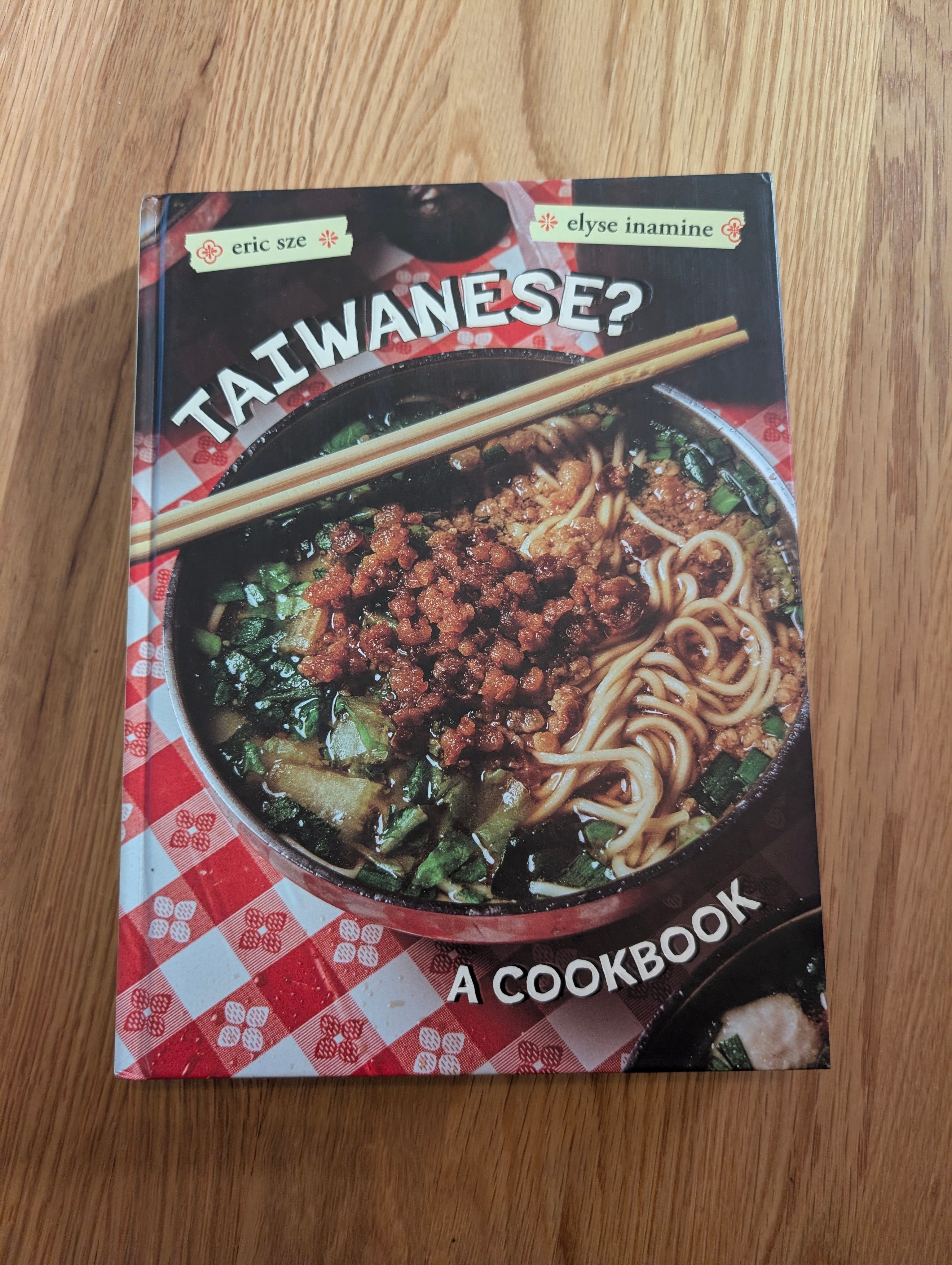
Taiwanese? A Cookbook by Eric Sze and Elyse Inamine was published recently, and I’ve found myself in this odd situation where the publisher sent me a free copy despite the fact that I pre-ordered the book (and let the publicity person at the publisher know that I had pre-ordered the book).
Since I have two copies, I posted on Instagram that I’d probably do a giveaway on noodsletter, so here we are: I am going to do a giveaway!
But then! The publicist saw my post on Instagram and said, “Great idea! Do you want me to send you more copies to give away?” And I said… sure?
So here we are, times two: I am going to give away six (6) copies of Taiwanese? A Cookbook!
If you would like a copy, just leave a comment indicating as much. Just like with the giveaways of my book, I’ll assign each commenter a random number then do a little RNG for the winners.
Unfortunately, due to shipping costs, you must have a US address if you’d like a free copy. You also have to be on the noodsletter mailing list.
To honor their commitment to this odd endeavor, I’m reserving three (3) copies specifically for paying subscribers, who will get priority and their own RNG round to duke it out. The rest are up for grabs for the rest of you. (If no paying subscribers throw their hat in the ring, then all six (6) copies will be up for grabs to everyone.)
As to why you’d want a copy, I think it’s an amazing cookbook, well worth the shelf space. I had wondered how it would compare to Made in Taiwan: Recipes and Stories from the Island Nation by Clarissa Wei with Ivy Chen, which is a remarkable book. They both sort of cover the same ground but they couldn’t be more different. There’s of course some overlap, like three-cup chicken and oyster omelets and beef noodle soup and popcorn chicken, but Wei’s book is focused on presenting these dishes as they are found in Taiwan, with Chen’s expertise guiding technique, whereas Sze’s offers up variations that are heavily influenced by his biography and a lot of tinkering in a kitchen.
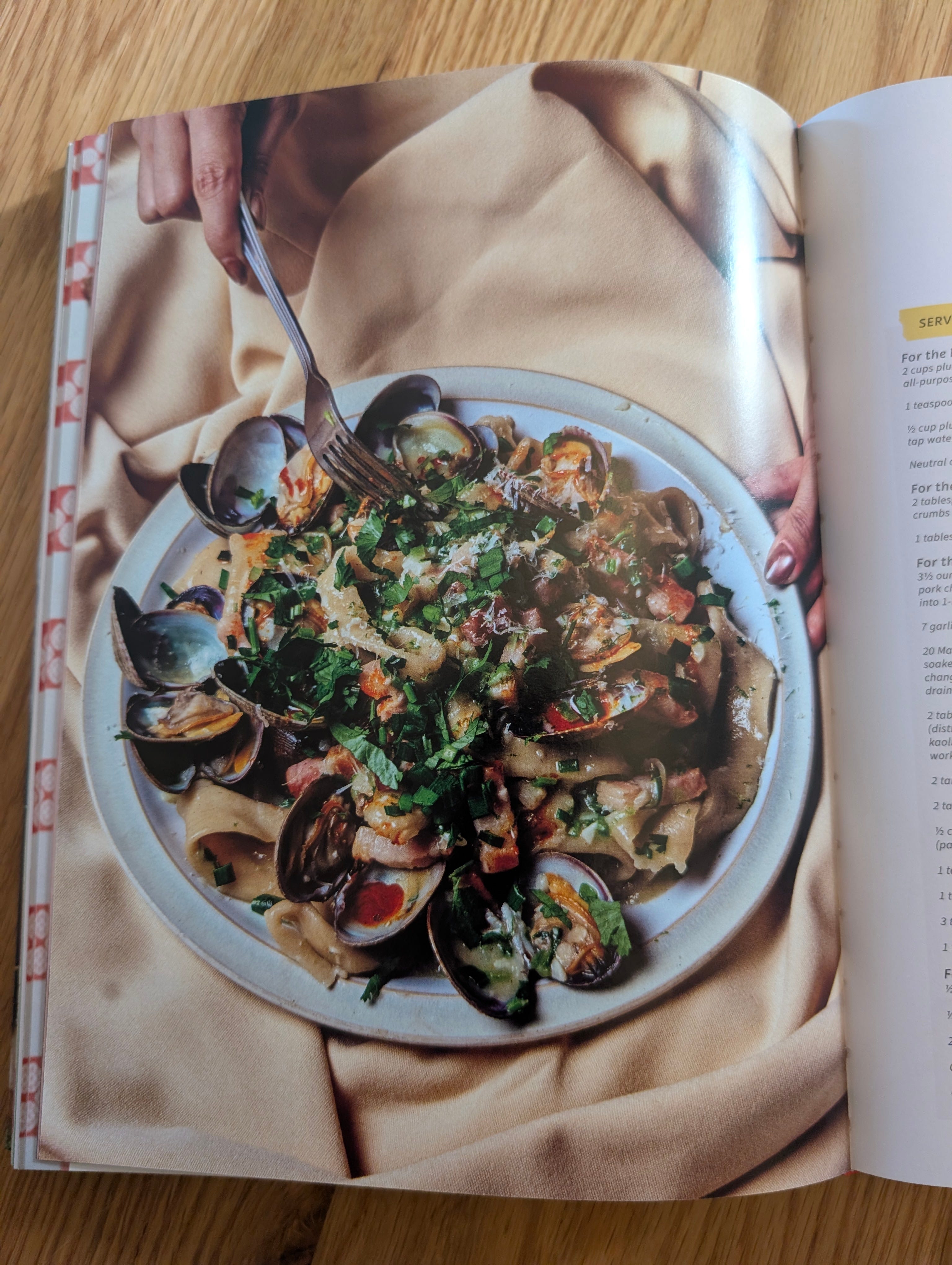
And that biography can basically be summed up as follows: Guy who lives to eat moves from Taiwan to the US and discovers he misses Taiwanese food terribly. Having no other recourse, he learns how to make the food he misses, which in turn leads him down the dubious path of becoming a restaurateur. As a restaurateur, he continues to try to make the food he misses terribly. In the process, he meets other like-minded chefs, they do crazy things together, and the guy realizes that he’s producing a ton of very interesting and delectable food that, despite being Taiwanese in spirit, plays fast-and-loose with tradition, and is ultimately better for it.
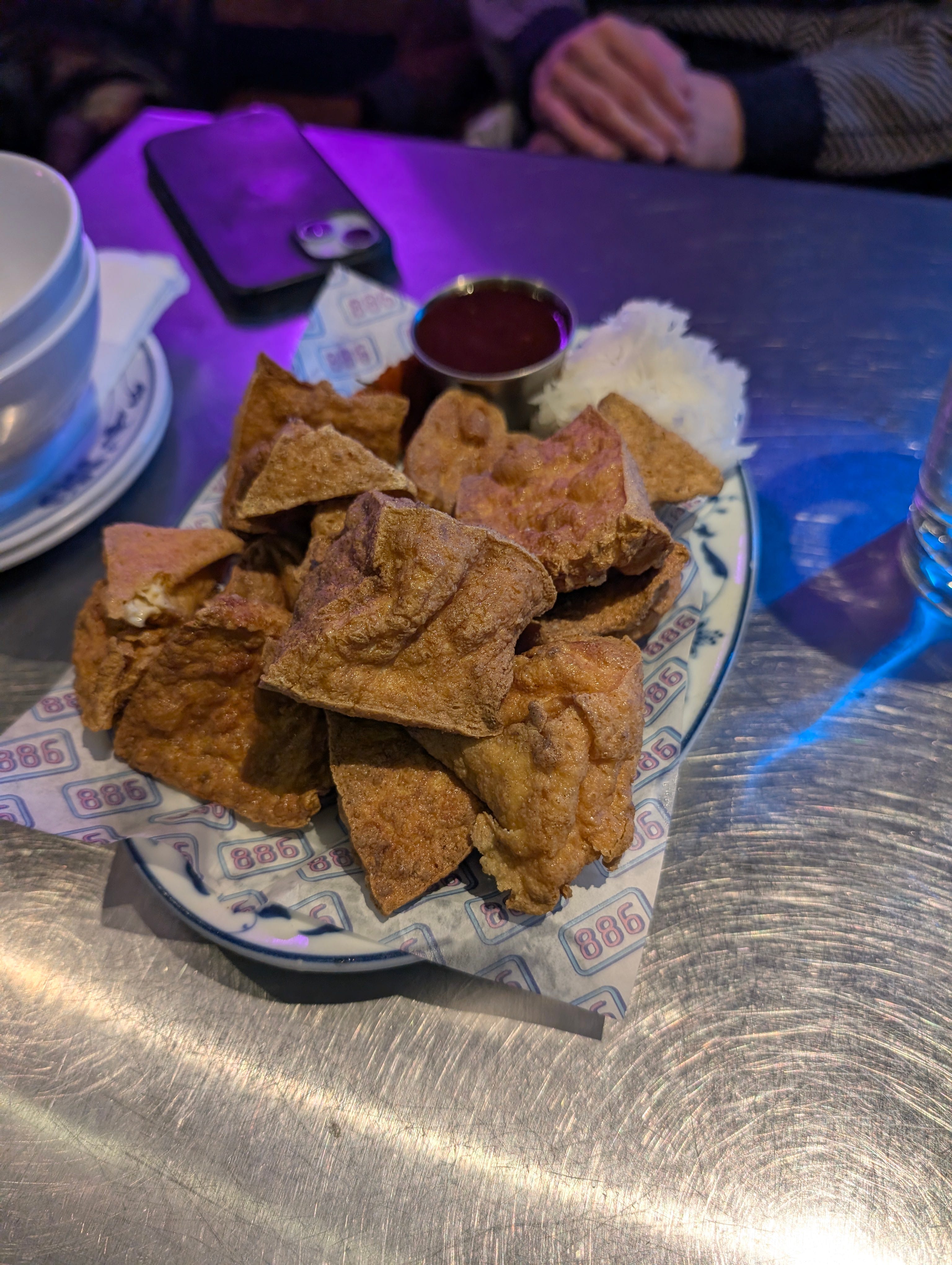
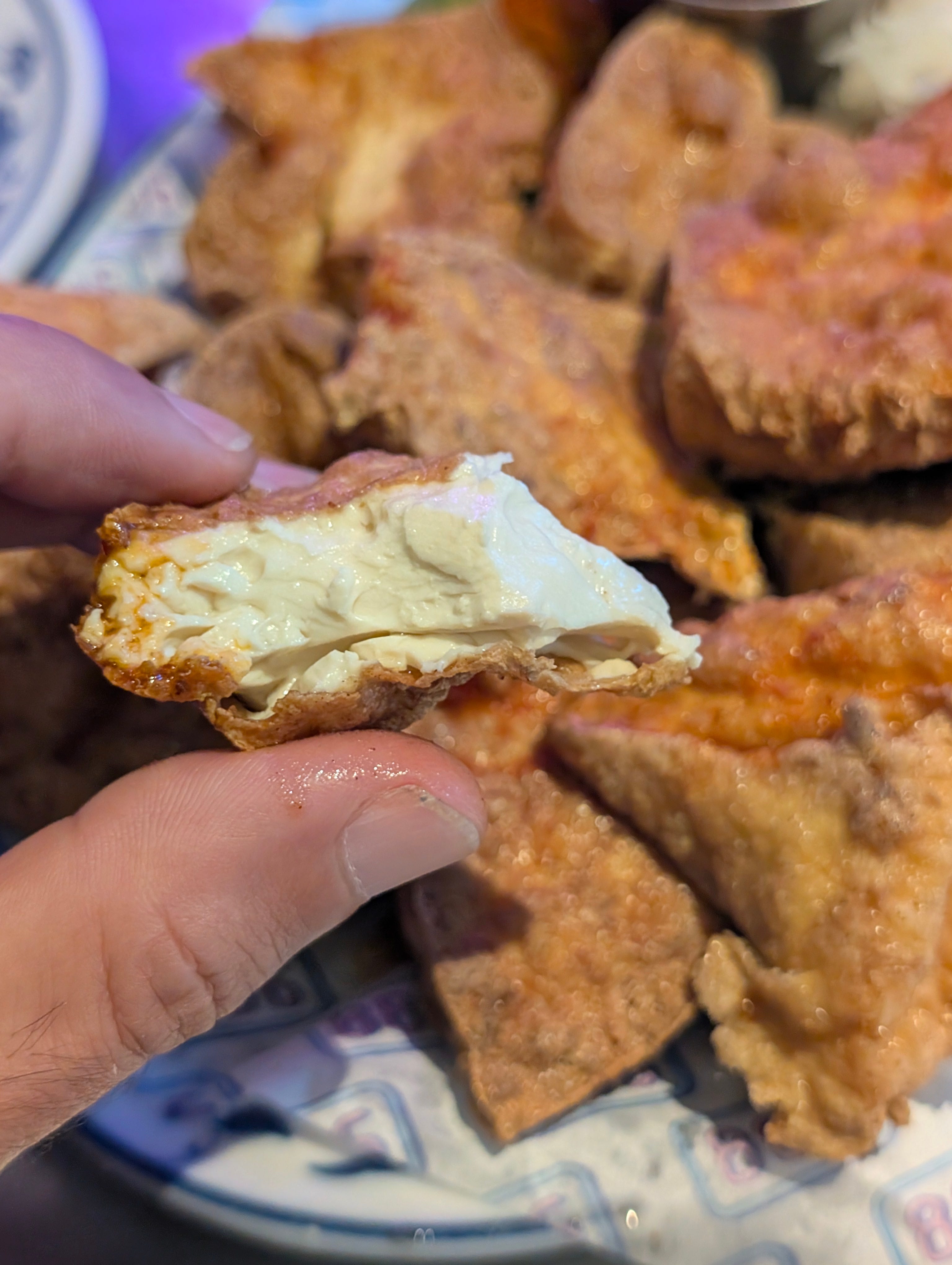
And the food is incredible, which you’d know if you’ve been to Sze’s restaurants. It’s food that’s made by someone who clearly loves eating great food. Matter of fact, when I pre-ordered the cookbook, it was primarily because I hoped it would reveal how they made the fried tofu at the now-defunct restaurant 886 (pictured above). Super creamy, super crispy, crazy angles on the shards of fried curd—it is, to this day, the best plate of fried tofu I’ve had. It is also unorthodox, as the Taiwanese dish is meant to be made with stinky tofu (there’s Ivy Chen’s recipe in Clarissa Wei’s book for that). And the method is so simple, but sort of nuts. (You’ll have to pick up a copy to check it out.)
What appeals to me most is Sze’s clear compulsion to iterate, constantly experimenting with whatever he’s making to make it even more appealing to eat, even if he ends up adopting unorthodox approaches or ingredients. It’s a fascinating look inside someone’s food-crazed mind, one that—and I’m flattering myself a lot here—happens to look a lot like mine.
1 Year of Homemade Ramen-ing; Or, Lies, Damn Lies, and Amazon Ranking Statistics
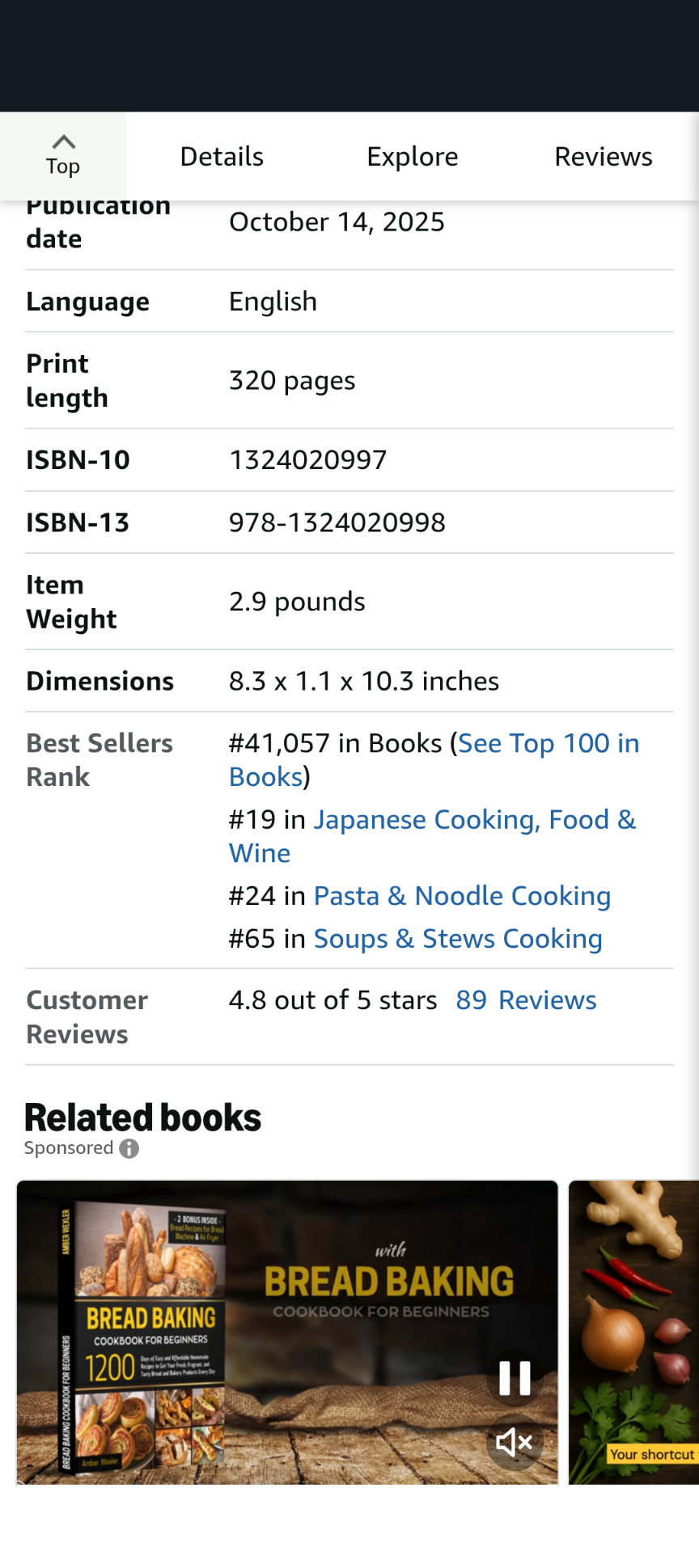
Ok, this is weird.
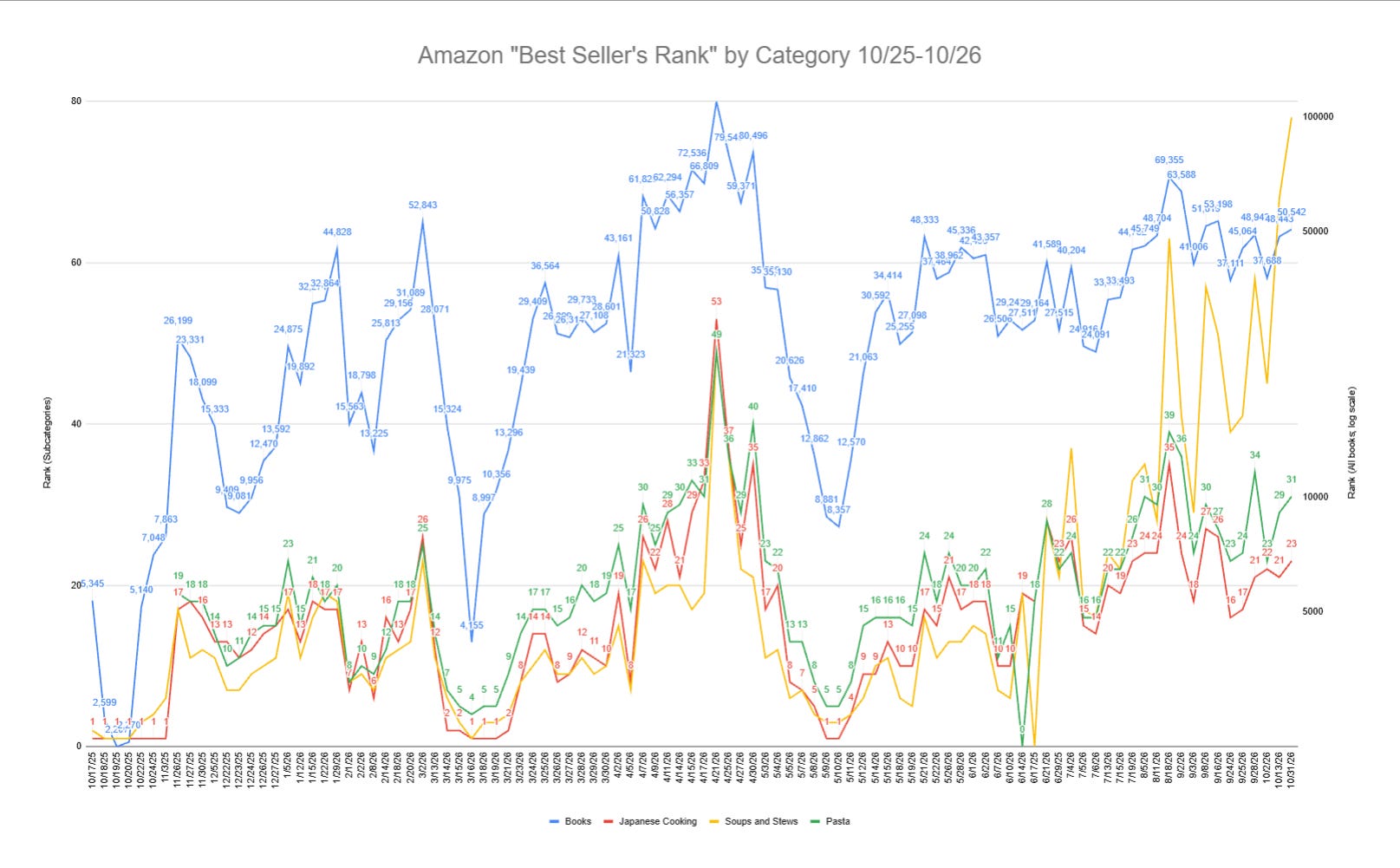
I have taken a screenshot of the Amazon “Best Seller’s” list rankings of my book regularly for an entire year. 99 times!
Don’t ask me why. Compulsion, obviously. Maybe masochistic, maybe a little narcissistic. Nevertheless, what this has produced is data. Behold, the 1-year performance of Homemade Ramen according to Amazon's “Best Seller’s” list rankings:
Here’s a link to the Google Sheets doc, if you’re curious.
(Also, I just want to note that I could’ve done all this with a klanger, but noodsletter is a 100% real-intelligence outfit, shitty graphics and all. If you’re a super AI person, I’m sure you can upload that doc to an LLM and it can make you a mind palace or whatever.)
The blue line represents where the book ranks in the “All books” category. (I’ve plotted these values against the right-hand y-axis so I could make it log scale, which makes it easier to see; the more specific book categories are plotted against the y-axis on the left, which is a standard scale.) (The lower the number, the better the rank.)
When compared to all other books, the book peaked in the first week after its publication, hitting #2,207 on October 19th, 2026. This is to be expected for any book that doesn’t go gangbusters, as all pre-sales are effectively counted as sales on the first day of publication, which begins a cycle of positive marketing reinforcement (it climbs the list; lots of marketing stuff is out to draw attention to the book; more people end up buying the book on Amazon; rinse and repeat.) This positive cycle is unlikely to be replicated.
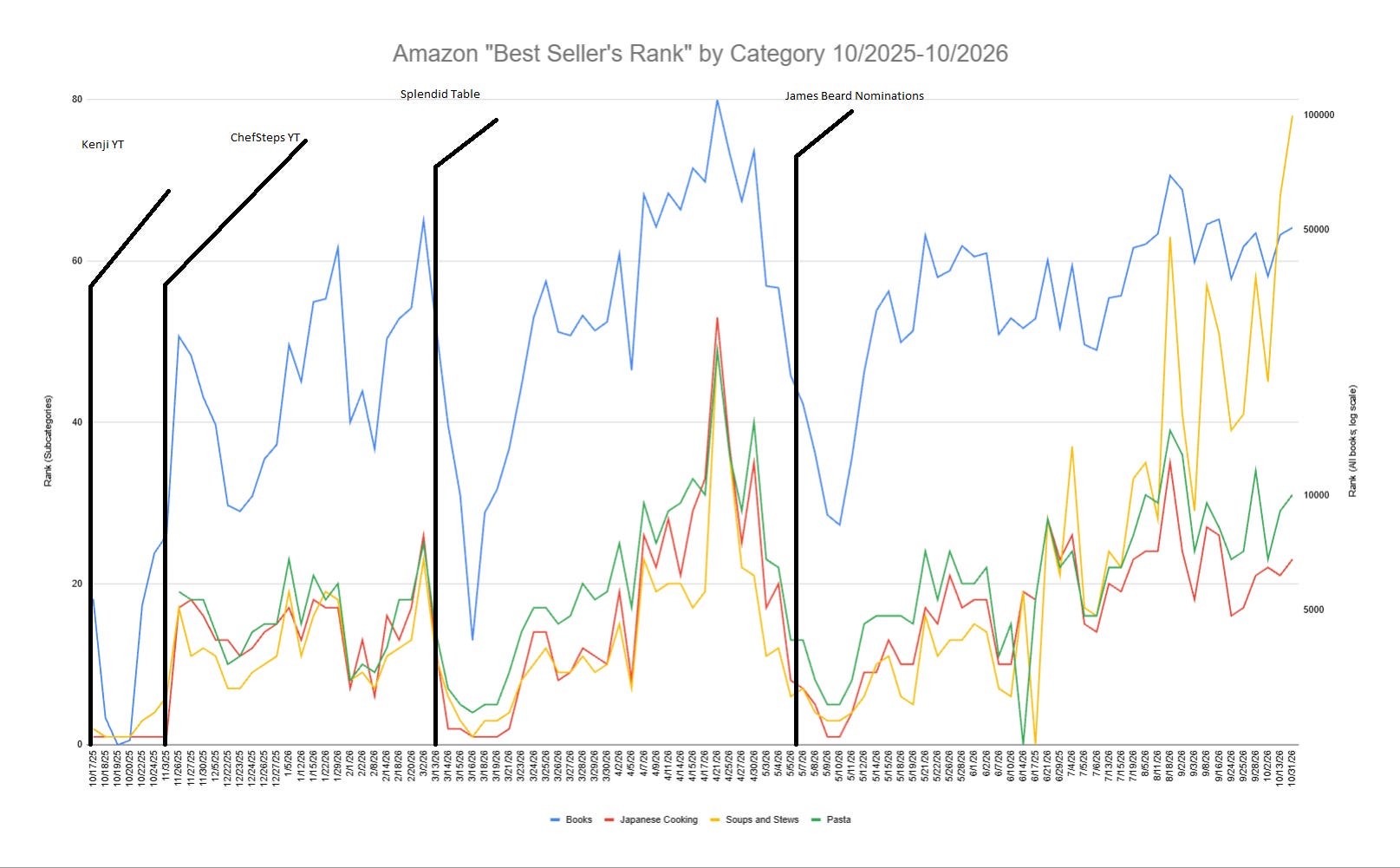
After that, it performs about as one would expect, with lower highs as the year goes on, and the (primary) reasons for those spikes are easy to identify. In order, they’re the video I did with Kenji; the video and recipe package I did with ChefSteps; the Splendid Table interview; and the announcement of the James Beard Award nominations.
A couple of caveats: These major events aren’t solely responsible for these spikes in rankings, but they did clearly change the momentum. While Kenji’s video was (brilliantly, on his part) timed for release around the book’s pub date, it came 3 days after, so the effect it had was clearly visible to me at the time, even though that moment was literally the high-water mark of other publicity activity. And I don’t really know what’s responsible for those other, more minor spikes…my memory fails me, and I can’t think of any high-profile mentions at the moment.
The most interesting thing I see here is The Splendid Table’s incredible reach. I did several podcasts/interviews, and The Splendid Table’s was by far the most impactful—a testament to the power of public radio, since their online presence isn’t particularly robust. I have heard from many, many people that they heard about the book because of Francis Lam’s interview…totally unexpected. Long live public radio!
The other part I find interesting is the impact of the Beard nominations. For all the talk about Beards not mattering—and there is a lot of talk about the Beards not mattering—they clearly drive conversation and sales, even when you don’t win.
Finally, you can also see how the larger trends in book publishing will affect a book’s fortunes. The drop in the spring is largely attributable to the bumper crop of new spring titles, and you can see at the tail end of this graph that the larger bumper crop of new fall titles has begun sucking up oxygen. This is best exemplified by the fact that my ramen book is just tanking in the Soups & Stews category as presumably thousands of books focused on cozy food come out as we settle in earnest into fall cookbook season.
Yes please!
Would love to try out Taiwanese!