
noodsletter #.0066
James Beard award nomination; Japanigans, part 2: ramenigans.
Hello!
You’ve received this email because you’ve signed up for noodsletter. Thank you.
All the recipes ever published in noodsletter have been archived in the very first noodsletter, which you can find here.
Order my cookbook, Homemade Ramen, now!
Please consider becoming a paid subscriber!
Book Bit
One step brought us into the family sitting-room, without any introductory lobby or passage: they call it here ‘the house’ pre-eminently. It includes kitchen and parlour, generally; but I believe at Wuthering Heights the kitchen is forced to retreat altogether into another quarter: at least I distinguished a chatter of tongues, and a clatter of culinary utensils, deep within; and I observed no signs of roasting, boiling, or baking, about the huge fireplace; nor any glitter of copper saucepans and tin cullenders on the walls. One end, indeed, reflected splendidly both light and heat from ranks of immense pewter dishes, interspersed with silver jugs and tankards, towering row after row, on a vast oak dresser, to the very roof. The latter had never been under-drawn: its entire anatomy lay bare to an inquiring eye, except where a frame of wood laden with oatcakes and clusters of legs of beef, mutton, and ham, concealed it. Above the chimney were sundry villainous old guns, and a couple of horse-pistols: and, by way of ornament, three gaudily-painted canisters disposed along its ledge. The floor was of smooth, white stone; the chairs, high-backed, primitive structures, painted green: one or two heavy black ones lurking in the shade. In an arch under the dresser reposed a huge, liver-coloured bitch pointer, surrounded by a swarm of squealing puppies; and other dogs haunted other recesses.
From Wuthering Heights, by Emily Brontë.
No, I have not seen the movie. (Which, I heard, is just about the first half? What?)
I am always a little surprised by the joints of cooked meat just sitting around in Victorian households. Clusters of legs of mutton, beef, and ham? That’s a lot of meat.
James Beard Award Nomination News

Homemade Ramen was nominated for a James Beard Book Award in the “Single Subject” category!
The other two books nominated are The Japanese Art of Pickling & Fermenting: Preserving vegetables and family traditions by Yoko Nakazawa with Rochelle Eagle and Morgenstern’s Finest Ice Cream by Nick Morgenstern.
A friend asked how big this is, and the honest answer is I have no idea. It’s the biggest award program in food media, which means it gets a lot of attention in the industry and everyone knows it’s coming every year. And I tend to remember the winners. But as to how being nominated affects book sales and/or longevity, I really don’t know. I imagine, like everything else in this world, it depends. (I know for a fact that a Beard winner from years ago in the “professional cookbooks” category hasn’t sold well at all, despite being pretty cool, for instance, but on the other hand, some of the biggest names in cookbooks have been Beard winners.)
Looking at the rules, apparently even nominee books can get one of those seals that look so appealing in bookstores affixed to their covers, which seems…both not right and, ya know what, I’ll take it.
Deeply doubtful that I’ll win, and, if I’m being honest, the prospect of competing against these other beautiful books to win an award has infected me with crazy competitive anxiety. But it looks like I’ll have to take a little vacation to Chicago in June, which is nice.
By the way, I’ve been meaning to ask all of you: If you have bought the book and if you don’t mind writing a review of it on Amazon, I’d appreciate it a lot. (It doesn’t have to be a glowing review, either, just your honest thoughts and impressions and, if you’ve made any of the recipes, critiques.) It apparently helps quite a bit.
Ramen in Japan
Here’s a brief recap of the ramen I ate on my trip, which, now, feels like it happened in another life. I posted all of them on Instagram—if you want to see the little video of the soup swirling into the spoon, go there. I feel silly taking that video every time, but it is sometimes instructive or revealing; of these bowls, the soup video that’s the most revealing is the one from Menya Hyottoko, because it was so very light.
Usually when I visit Japan, I go a little ramen crazy, and I try to pack in as many bowls as possible while also eating all the other stuff I want to eat. This drives my family crazy, and I end up feeling deeply uncomfortable because I’m basically doing my best impression of foie gras geese, auto-gavaging with extremely salty noodle soup, while also eating all the other wonderful things you can eat in Japan.
This time I tried to be a little more restrained, which meant that I ended up eating ramen just six times in 10 days. (In retrospect, I could have probably eaten ramen a couple more times!)
The goal on this trip was to not stress out about ramen. I wasn’t going to go on any pilgrimages to famous shops or wait in long lines; I also was experimenting with just using my location data on Tabelog to find the highest rated restaurant within close proximity to wherever we were when we wanted to eat. Other than that, my one rule when in Tokyo was avoiding places I have been to before.
I was talking about the food in Japan with my brother last night, and we were toying with this idea that superlatives like “the best ramen” or “the best yakitori” or “the best [whatever]” don’t really make any sense; that they only serve a purpose in the context of scarcity. If there are just 50 ramen shops in a city ranging in quality from abysmal to pretty great, then identifying the best ramen in the city is a worthwhile endeavor; but if there are thousands of ramen shops in a city ranging in quality from pretty good to transcendent, then identifying “the best” shop is an exercise in futility.
That’s my basic takeaway from this most recent trip, both generally and specifically with respect to ramen. The ramen is just so good across the board, and there are truly great shops seemingly a stone’s throw from anywhere you are in the country, and there might be a transcendent shop just around the corner. It’s incredible.
Tani Ramen
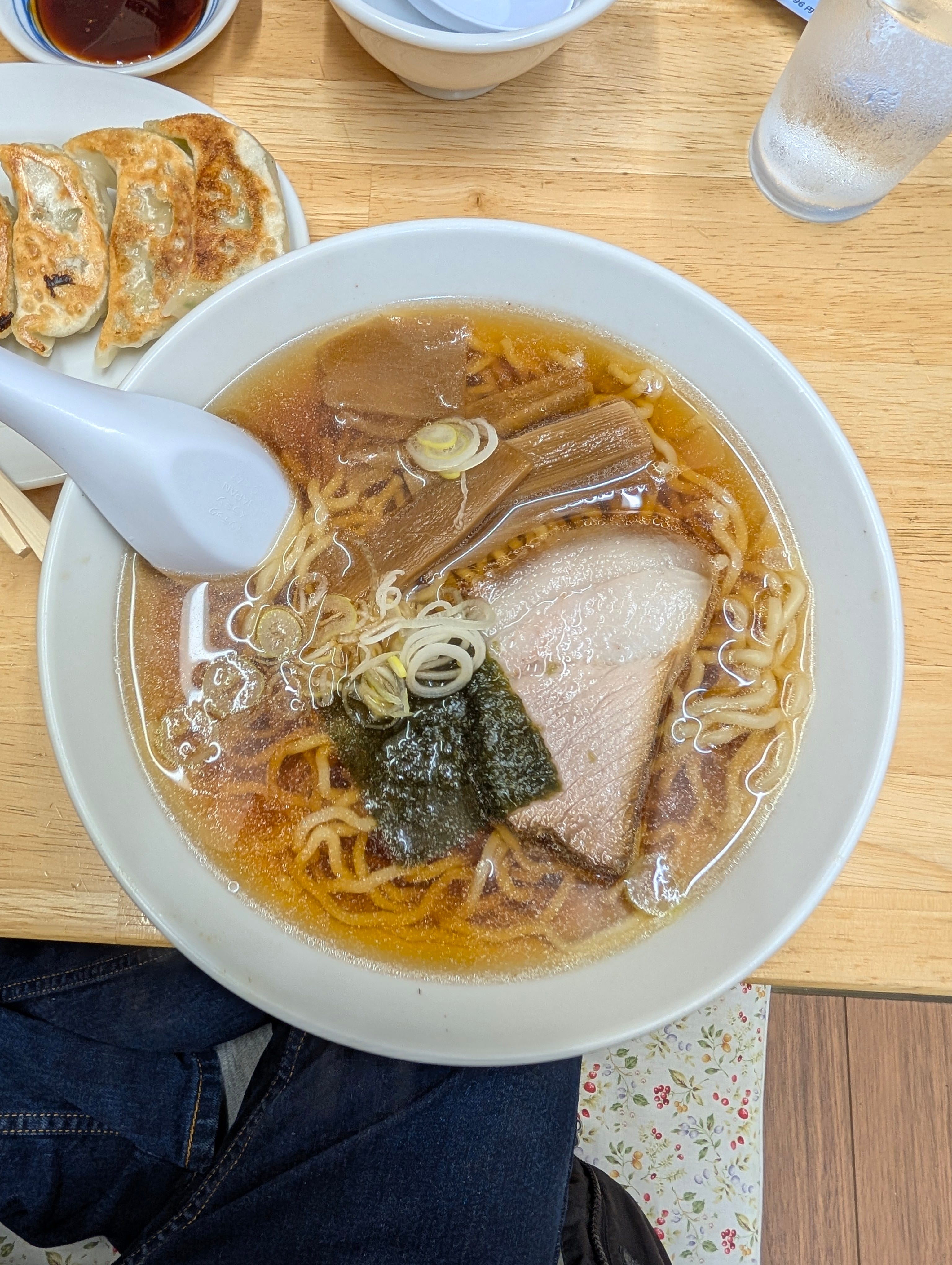
A very old-school ramen shop under the train tracks in Ginza. I am a fan of old-school ramen (clear, light pork broth with dashi elements; a kind-of-hammered piece of sliced pork; some menma; negi; a square of nori; chewy, curly noodles), but this was a bit underwhelming. I just wanted every element to be slightly less old-school—richer broth, more dashi elements, more carefully cooked pork, softer noodles.
The one interesting thing about the broth was that it had a strong wakame, or soft seaweed, element to it, which was both surprising and, as I got to the bottom of the bowl, kind of nice.
Men Fujisaki
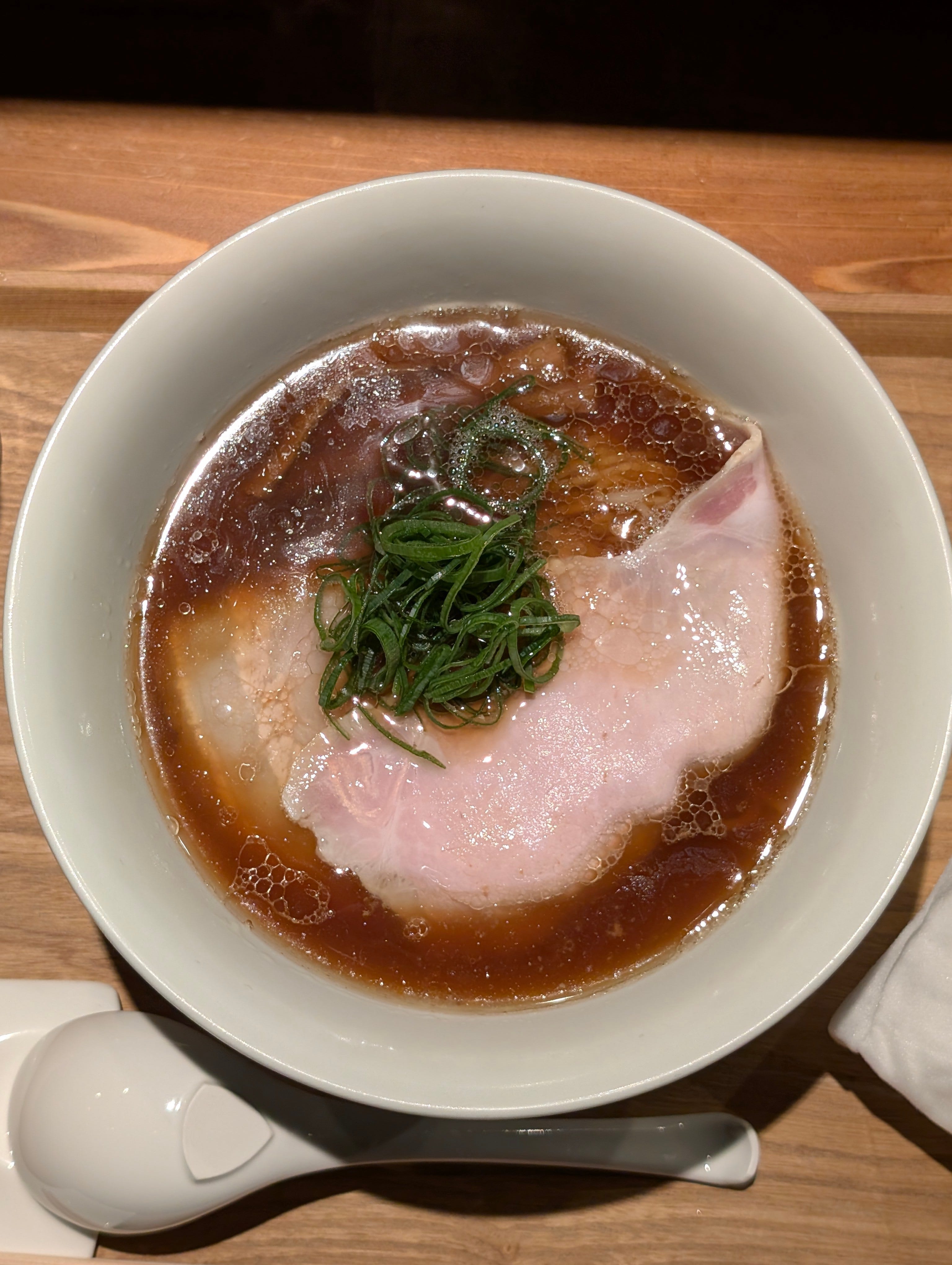
This spot is one of the top 100 ramen shops on Tabelog for 2026 (called the hyakuten), and it’s very new-school: super-refined soup with thin, straight noodles made in-house (there’s a noodle machine in the entryway like a greeter), and a straightforward tare of very rich-tasting soy sauce.
This place was about a 20-minute walk from our Airbnb, and it was on the same street as four other highly rated shops. I picked it because I just liked the look of the exterior, and it’s one of the finest bowls of ramen I’ve ever had. I made a mistake in not ordering the wontonmen, since apparently they make wontons to order, and they make the skins themselves. I looked up the shop after shaking off my disbelief at how good it was and they also run specials all the time, different noodles, different soups, with an emphasis on their vegetable products (they identify where their negi and nira come from, for example).
Funnily enough, this style of ramen happens to be represented quite well in the US, all things considered. Both Pickerel in Providence and Cafe Mochiko in Cincinnati do versions of this style, and they’re not so far off in terms of quality. (An insane thing to say a couple years ago and nevertheless now it’s true.)
Kourakkuen
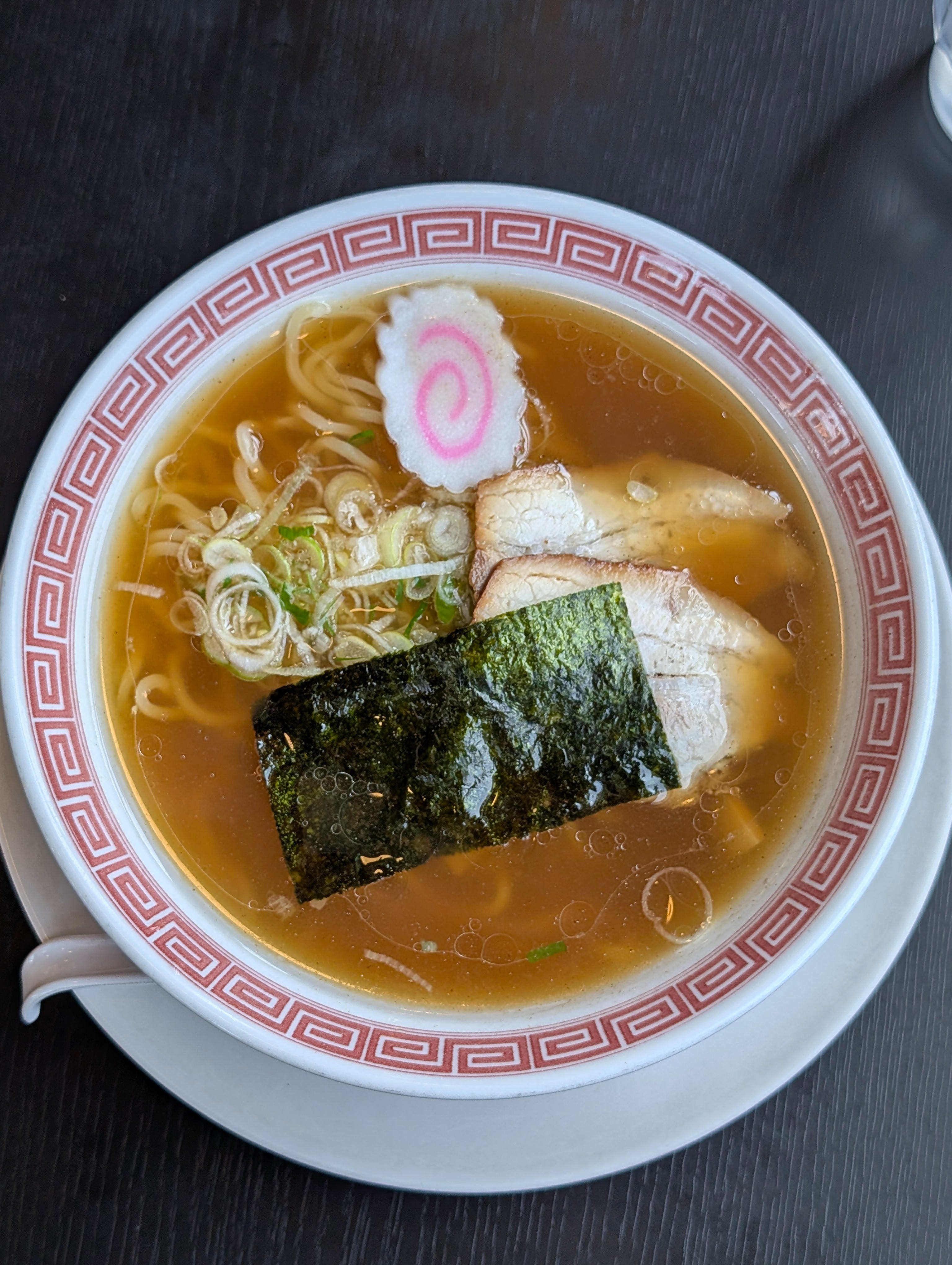
This is a chain restaurant that is known for being affordable, and it’s the ramen I grew up eating. (The chain’s name and decor changed a while back, but the food is for the most part identical to what I ate as a kid.) We’d spend months in the summer at my grandparents’ house, where there was literally nothing to do in the time before smartphones and internet and tablets and streaming videos. Since there was a video rental place right next to this ramen shop, my brother and I would bike for 30 minutes both ways every day and eat ramen and return and pick up VHS tapes.
I’d always get an order of shoyu ramen, extra menma on the side, and gyoza, and I still do today. I have strayed from that order a couple times in the last 35 years, and regretted it each time—despite the many offerings, shoyu is their thing.
And you know what? It’s great.
Hokuto
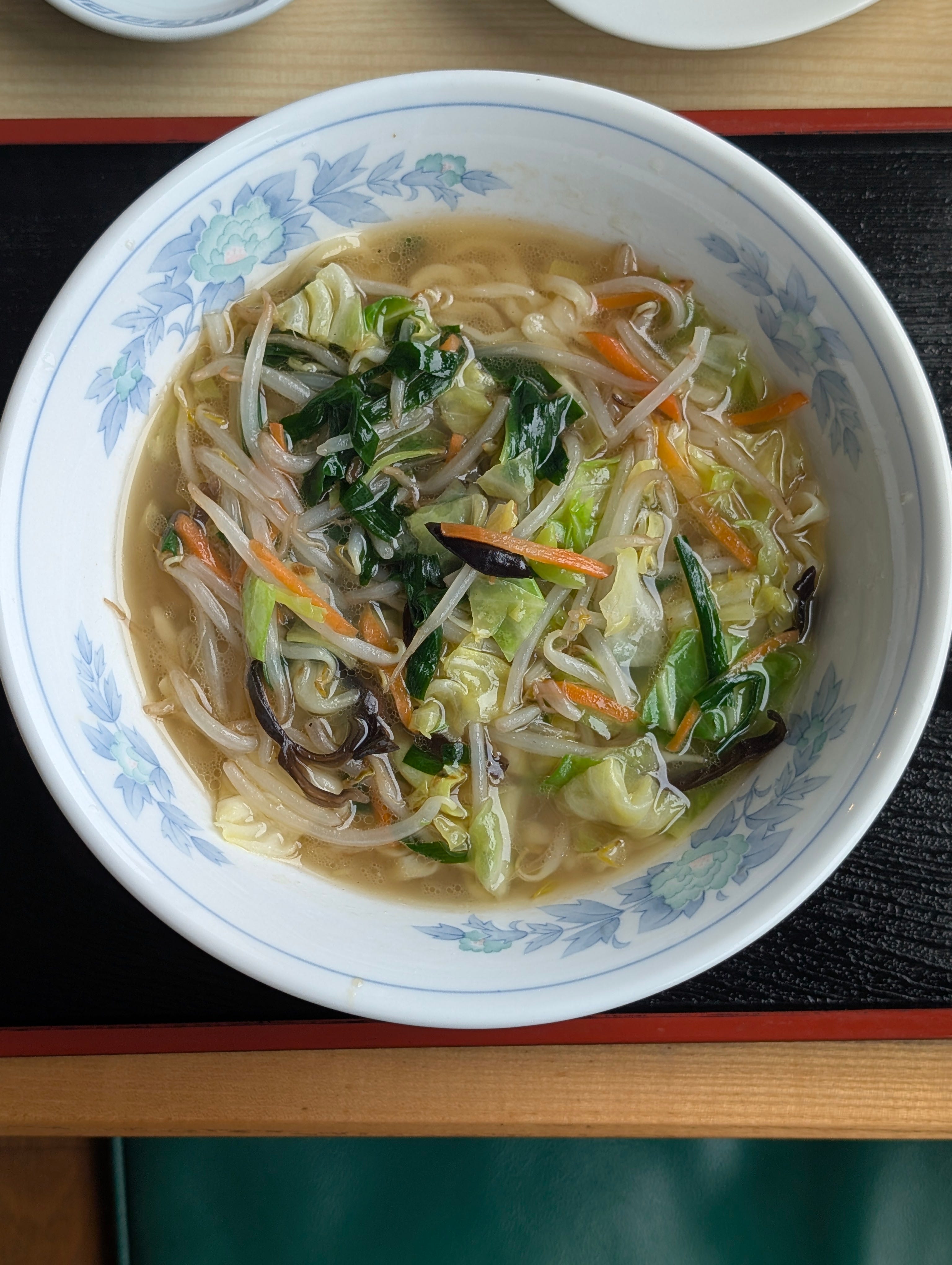
This place is steps from my grandparents’ house, and has one of my favorite bowls of ramen in the world: the tanmen. (I realize now that I have been calling it a shio tanmen for a long time, but it is in fact just a “tanmen,” as shio is implied.)
It’s run by a married couple and they’ve been toiling away for decades in this location, and the husband/chef is a true shokunin, or dedicated craftsman. He makes the noodles by hand every day, slices the negi to order, stuff like that. And his ramen is very good—heavy on the dried fish, but he uses a different dashi (or dashi/stock blend) for each of the bowls—lots of thought and care has gone into every preparation.
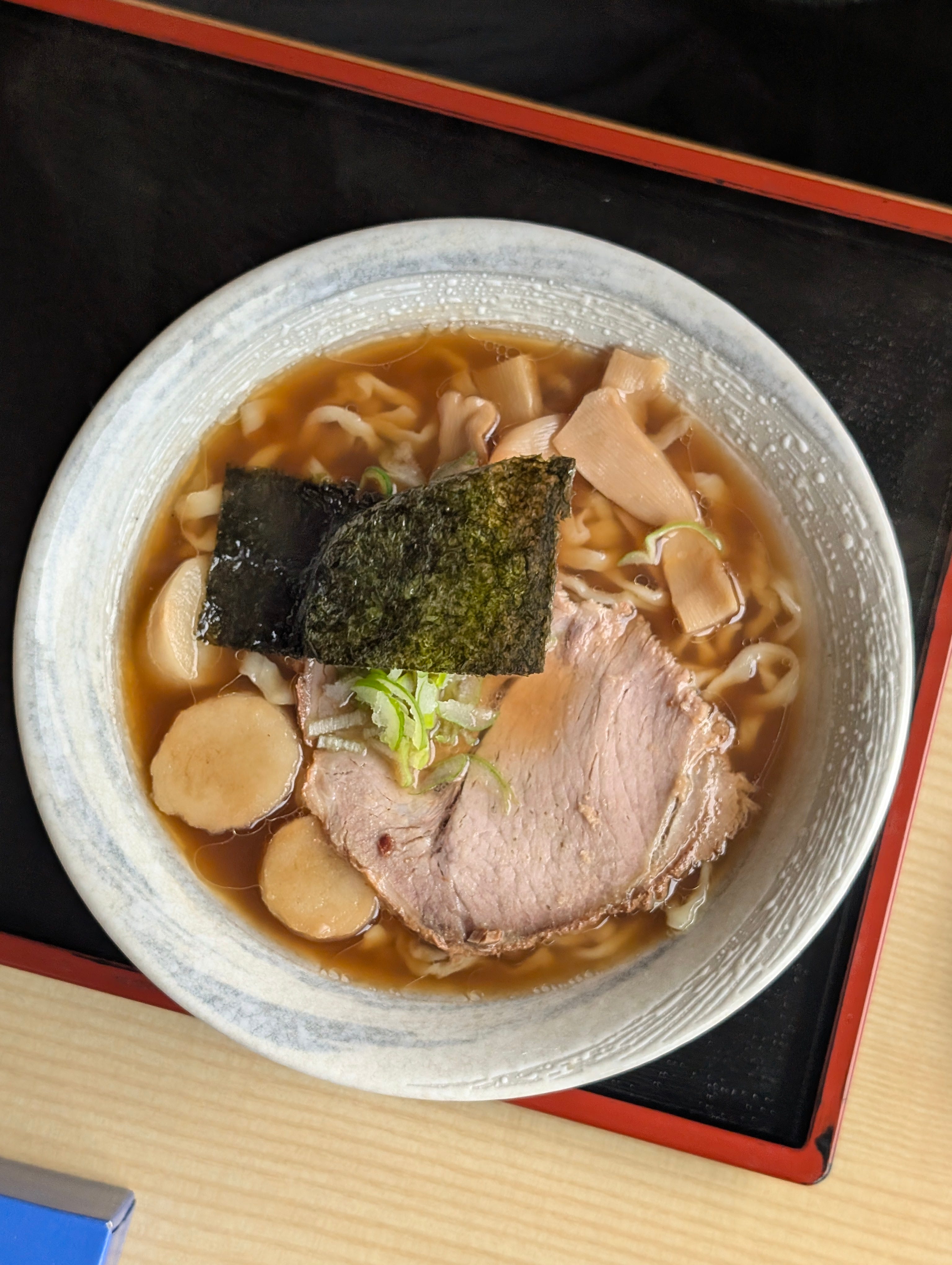
The provenance of the ramen is a little confusing. He’s from Hokkaido originally, hence the name, and there’s a bunch of stuff about Hokkaido in the shop, but the guy learned how to make ramen somewhere more southerly (presumably in Fukushima), as the ramen is very Fukushima-coded—all that dried fish, the light tanrei (clear) soups, and the noodles are soft and squishy and very unlike the wiry ones that you’d expect to find in the miso ramens Hokkaido is known for.
One of the book’s recipe is heavily inspired by the tanmen at Hokuto, so when I went by this time I dropped off a copy of the book (and explained the whole thing). The chef was very flattered and offered to show me how he makes noodles the next time I’m in town.
Tori Next
We did a very brief day trip to Nara on our penultimate day. (We were in Osaka; and, oddly, I did not eat any ramen in Osaka—a shame. Next time!)
We just wanted to grab lunch somewhere, but I turned to Tabelog and found a couple shops with surprisingly high ratings. The closest one that was open was Tori Next, and we walked in to a mostly empty shop with two women manning the counter, which was unexpected. (My daughter got a huge kick out of it.)
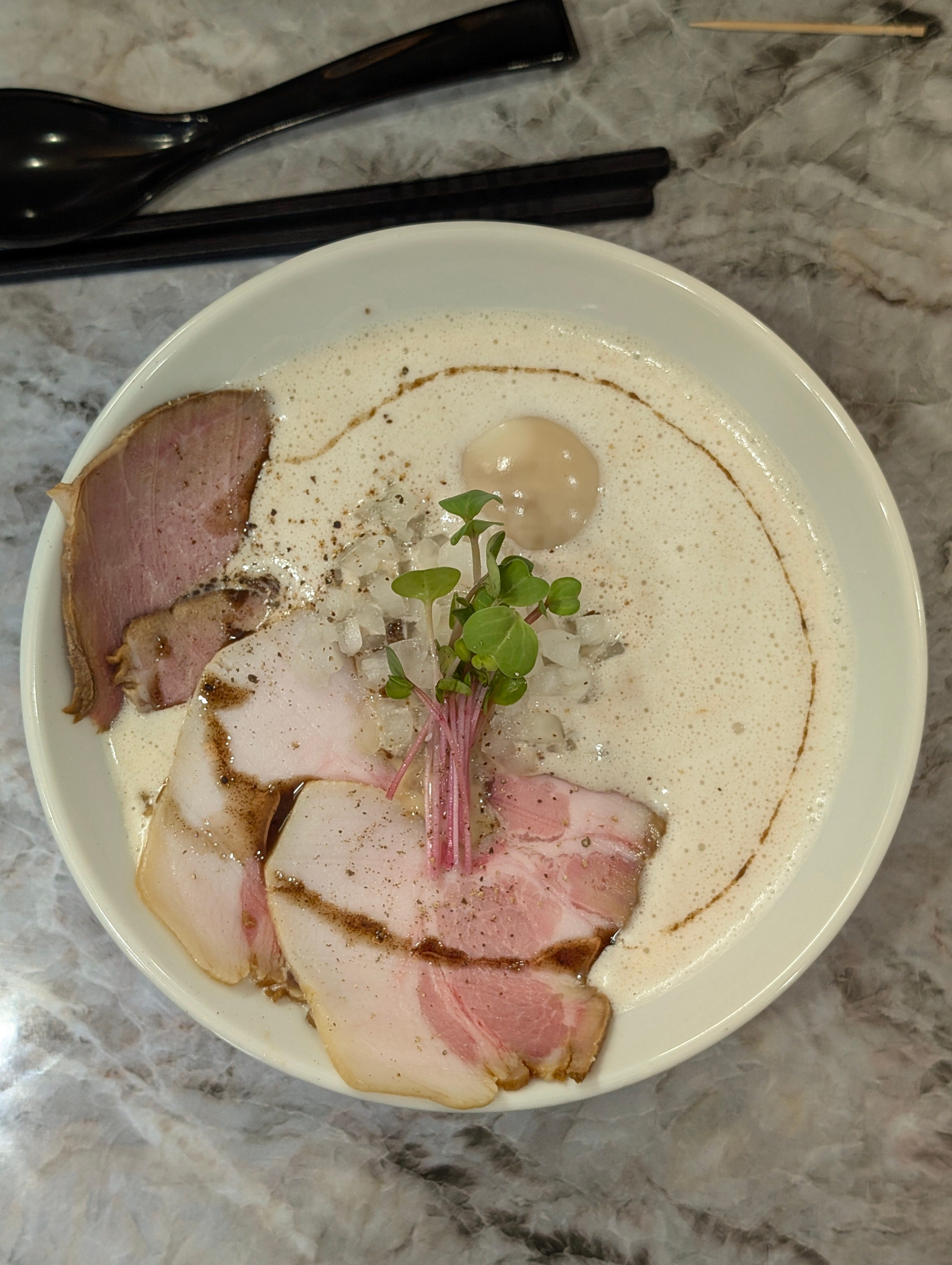
This place is more of a tori paitan tsukemen place, but I wanted soup ramen, so that’s what I got. The soup ramen was very good, and they blend the soup with a hand blender as it warms to give it a frothed/steamed milk consistency. I’m not the biggest fan of this technique (I don’t think it add all that much?), but this ramen was delicious nonetheless. The chashu was not my thing, however; they intentionally leave a huge fat cap on the pork, which had a ham-like quality to it, and I just don’t see the appeal. There were two kinds of chashu in the bowl, and the leaner one was much better.
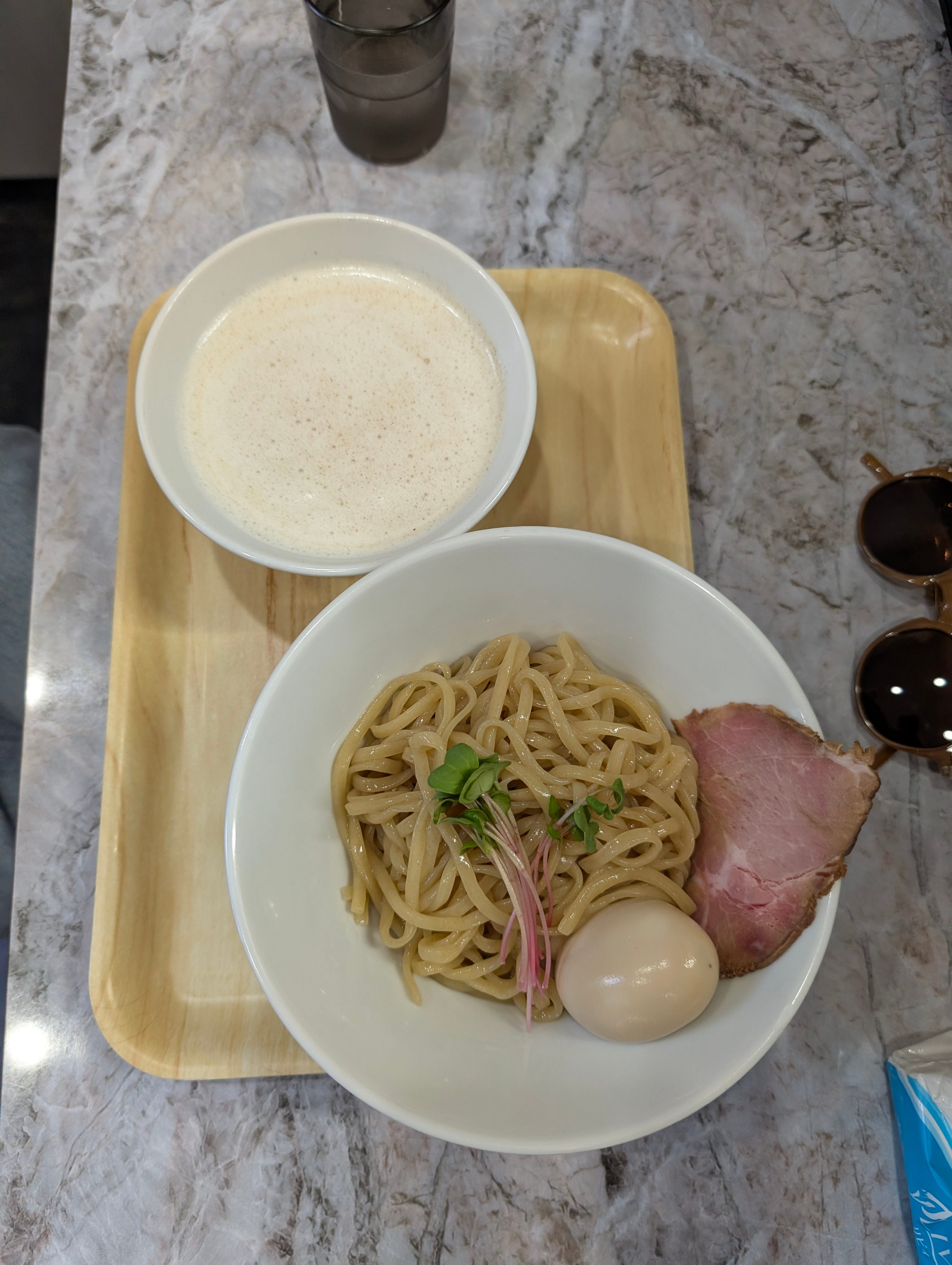
My wife got the tsukemen, and I got to eat about half of it, and it was just exponentially better, and I don’t really get why. Seemed like the same soup and tare, but the noodles were just way more delicious.
Menya Hyottoko
The biggest surprise of the trip, felt like kismet. We left Osaka at 9 am and had a couple hours in Tokyo before we had to get to Narita. We were in travel mode, so the plan was to just hit up a McDonald’s in Tokyo Station and do some shopping, during which time I could sneak away and eat somewhere that wasn’t on the Tokyo Station ramen street. (No shade to that ramen street, but there literally are 2x, 3x, 10x more amazing places steps away if you just leave the station.)
Unfortunately, the McDonald’s in Tokyo Station was closed for renovations, and my kid had her heart set on it, so we hoofed it to the closest one nearby, which was in Ginza. As soon as they got settled, I pulled up Tabelog and found this spot, which is an outpost of a famous shop in Yurakucho.
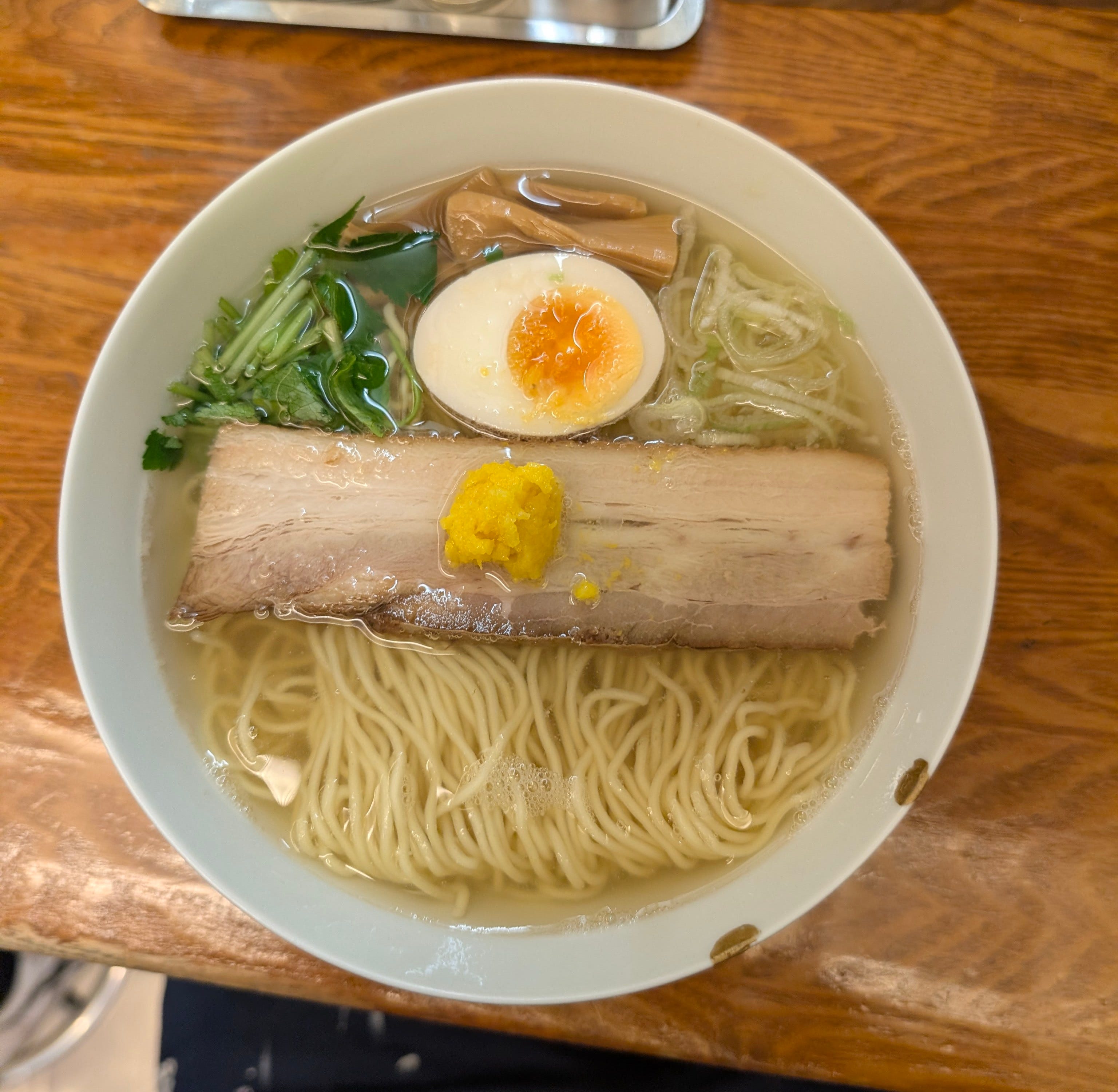
This is one of the shops that first made a name for itself by putting yuzu in ramen. I didn’t know this; I just ran across the street, down into a basement, and found a line about eight people deep in front of this tiny counter. As I ordered from the ticket vending machine, I thought about just going plain Jane ramen, but the yuzu seemed like a good thing to try for a last ramen bowl in Japan. I only regret not getting the yuzu chashumen!
Because this bowl was incredible—a super super light soup with very little body, but still crazy flavorful. The combination of yuzu, mitsuba, and negi as toppings with the soup was so refreshing, but not in a cold-drink-on-a-hot-day way; this was a piping hot soup that was light and bright.
The chashu was also unreal. I have no idea how they make any of it, but it is the only time in my life I have ever regretted not getting extra chashu. It seemed boiled, not braised, but very gently, and it had a deeply savorily delicious “crust” all around it.
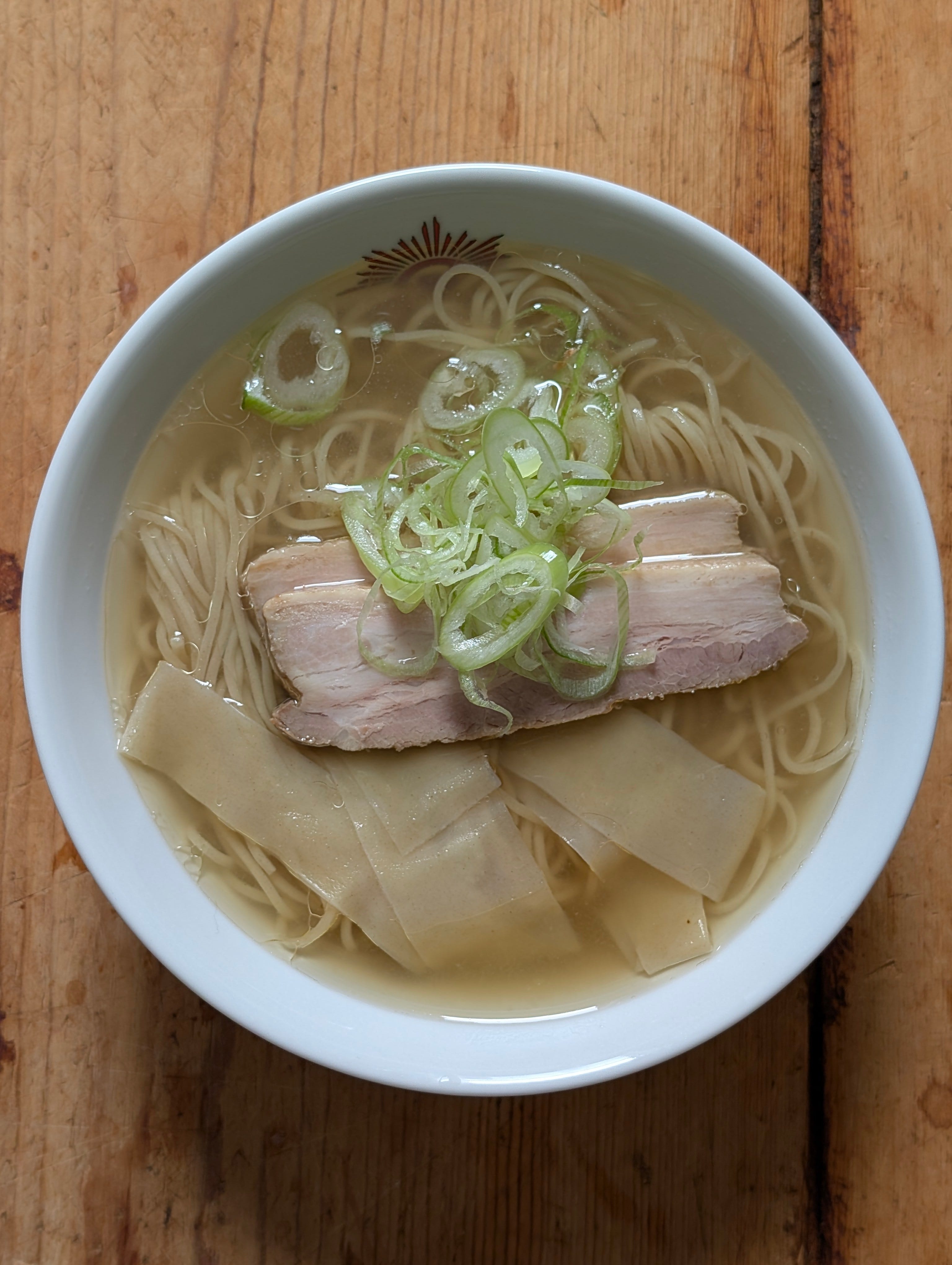
It was so memorable, that I (sort of) tried to replicate it, using a super-fortified chicken/pork/turkey stock combined with a very strong kombu dashi and a shio tare that I packed a ton of dried seafood (but no katsuobushi) into. I simmered the chashu in the pot, totally unseasoned, and then marinated in a tare afterwards, and it was sort of close (very sort of!) and very good, but not quite the same as the Menya Hyottoko version.
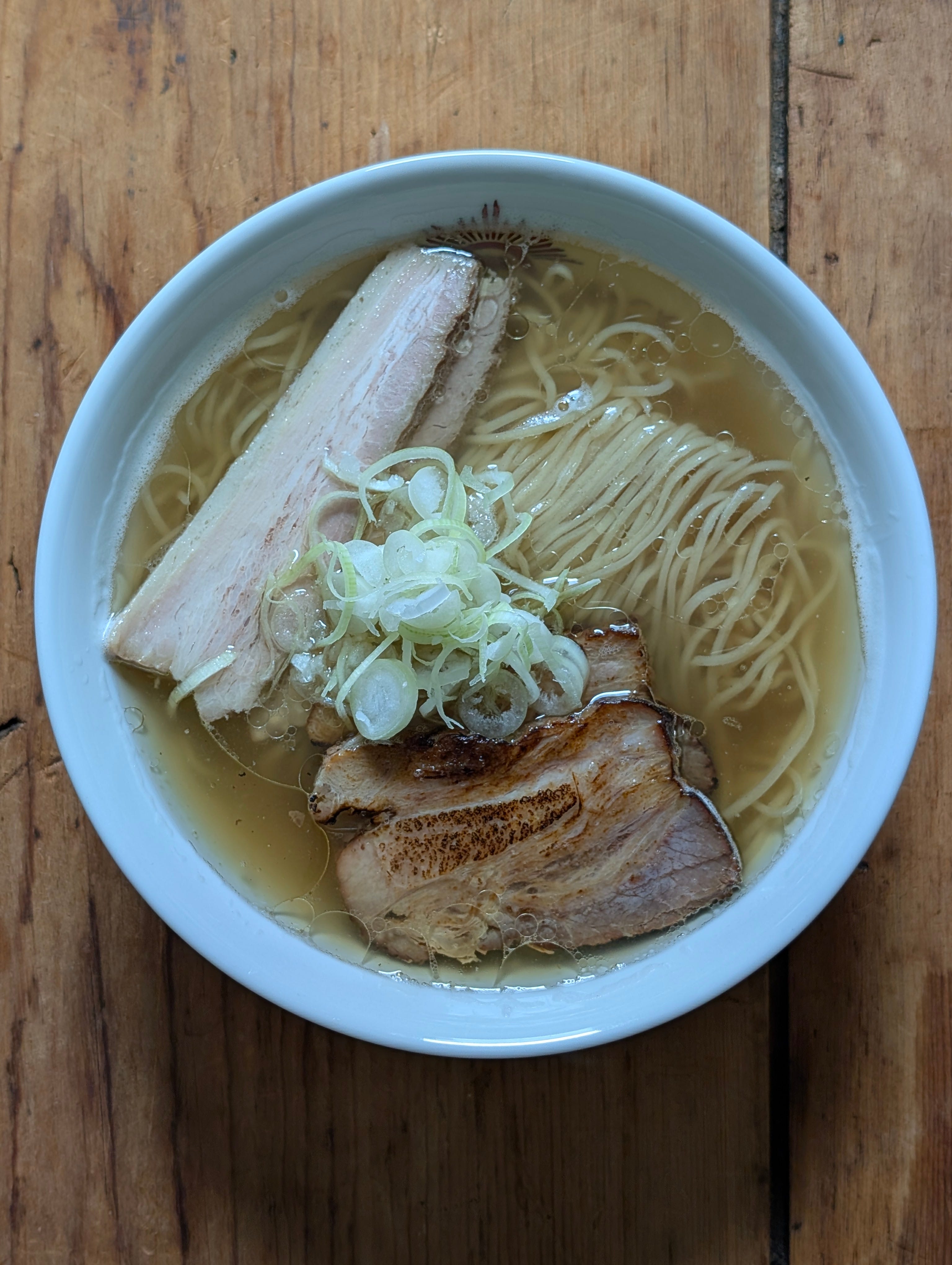
I also ended up having to add Totole chicken powder to future bowls with the same tare and soup because the first bowl lacked some umami depth, and they were incredible. Maybe I’m entering my shio ramen era. (Or my chicken-powder-in-ramen-is-fine era, who knows.) (It is totally fine.)
Congrats a billion times, brother, you deserve it
Dammit sho!!! I'm hungry!!!! Congrats though. I'm so proud of you. So deserved. My money's on you. It always has been!