
noodsletter #.0060
A weekend at Akahoshi Ramen; a Milk Street live class; oh, my book published
Hello!
You’ve received this email because you’ve signed up for noodsletter. Thank you.
All the recipes ever published in noodsletter have been archived in the very first noodsletter, which you can find here.
Going to be talking about book events and book stuff, including the pop-up collab event I did at Akahoshi Ramen, a class I’m doing in November for Milk Street Cooking, and the big ramen package we just put out at ChefSteps!
Order my cookbook, Homemade Ramen, now!
Please consider becoming a paid subscriber!
Book Bit
There is much fright. It settles like a cloud of acid in the stomach. Doctors prescribe milk. They know there is no calcium in kindness. Although unwell, one tries to stick one’s words together well; but perhaps, as I write this, the sentences these sentences are supposed to front are melting like icicles, and pointedly passing away; so that, reader, when you turn the final pages of this preface, you will be confronted with a pale, pretentious blank; and if that happens, I know which of us will be the greater fool, for your few cents spent on this book are a little loss from a small mistake; think of me and smile: I misspent a life.
From the preface to In the Heart of the Heart of the Country, by William H. Gass.
The Cookbook
Has arrived. Has been printed, packaged, published, promoted, shipped, strategically displayed, made available for sale. It’s been produced.
I have to apologize to you all because I had promised to send out noodsletter updates about the handful of events meant to promote the publication, but I did not do that. My only excuse is between my day job, the traveling, the events, etc., I have not had the presence of mind to scribble out newsletters.
That said, there haven’t been all that many events. I went to Buffalo and did a little cooking demo; I went to DC and did a book talk; and I went to Chicago for a collaborative event with Mike Satinover at Akahoshi Ramen. (More on that last one below.) There aren’t any more in-person events on the calendar for the year; if that changes, I’ll do my best to note it here. There is an online event in November, which I’ll discuss below.
I did want to note that the winner of the free copies have been chosen and two of them, I think, received their copies by now: Jerry, Henri, and Leo. (Leo, if you see this, I’ll be sending out your copy in the next couple days.)
I am going to hold off on book giveaways for now. (I gotta make sales!) But I’ll probably start them up again at some point before the holidays, since people really seem to like signed copies.
Oh, and if you still haven’t picked up a copy, perhaps you’d like to?
Here’s a link to the publisher’s page. If you’re after a signed copy, in Seattle, I signed book plates at Book Larder; in Buffalo, I signed copies at Read It and Eat Bookstore; in Chicago, you can pick one up at Unabridged Books and City Lit Books; in New York, you can pick up one up at Kitchen Arts & Letters and Books Are Magic (I will be signing more books at NYC indie bookstores as soon as I can make my way to them).
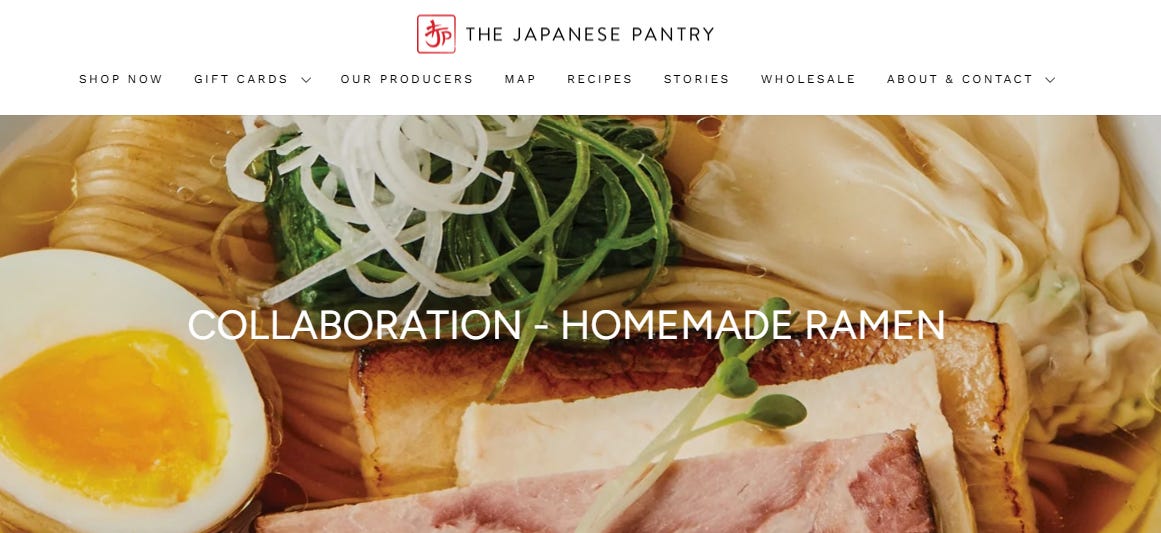
You can also snag a book plate-signed copy at The Japanese Pantry. The fine folks over there are selling it as part of a collaboration—they’re also offering a bundle of products I selected, consisting of stuff I use frequently at home. It’s pricey, no doubt; but each of the products I’ve highlighted, when I tried them the first time, gave me an unexpected education, and they’re delightful to cook with. If the bundle seems a bridge to far, there are three products in particular that are worth picking up, even if you don’t make ramen (although for the latter two I suppose you’d have to be making Japanese food): The Suehiro usukuchi, the katsuobushi, and the dongko shiitake.
(I don’t take a cut of sales or anything—I honestly just like their stuff a lot, and you’ll see a fair amount of it in the ingredient photos in the book.)
Milk Street Class
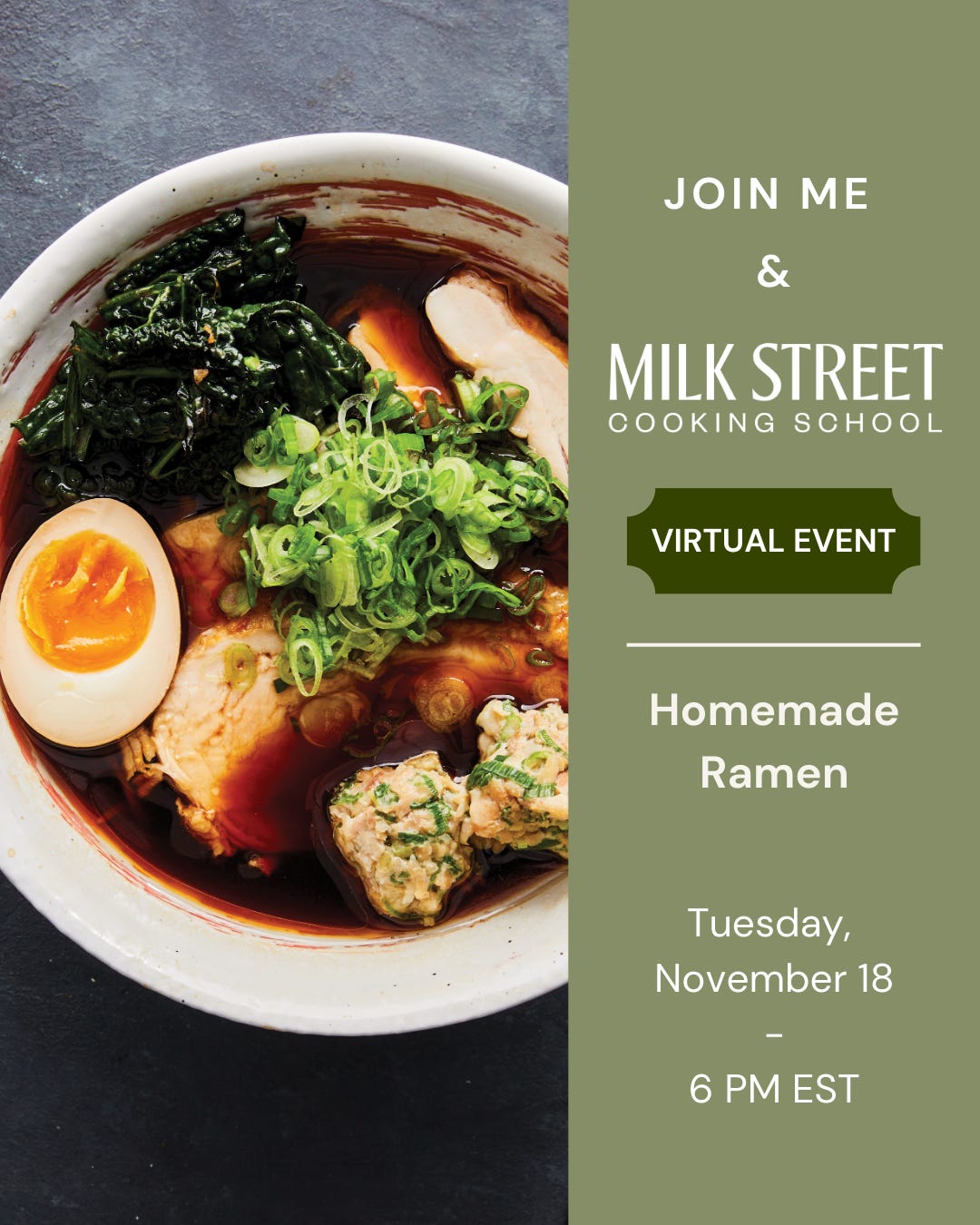
I’ll be doing a live streamed class on making ramen for Milk Street on November 18.
We’re going to be doing the “easiest” recipe in the book, the roasted chicken shoyu. I’m really not sure how this is going to work, given my apartment kitchen is tiny and my streaming tech is less than top-of-the-line, but they’ve assured me they’ve worked with tiny kitchens and less-than-ideal tech before, so I guess we’ll see! It’ll be a learning experience for all of us.
Weekend at Akahoshi
One of the most gratifying parts about this experience has been the fact that it’s somehow gotten me invited to work and/or hang out in the kitchens of several amazing ramen restaurants. The trip to Cafe Mochiko in Cincinnati a few months ago; the visit to Pickerel in Providence (which I have yet to write up, maybe one day); and this most recent stint in Chicago—it’s been wildly edifying and entertaining.
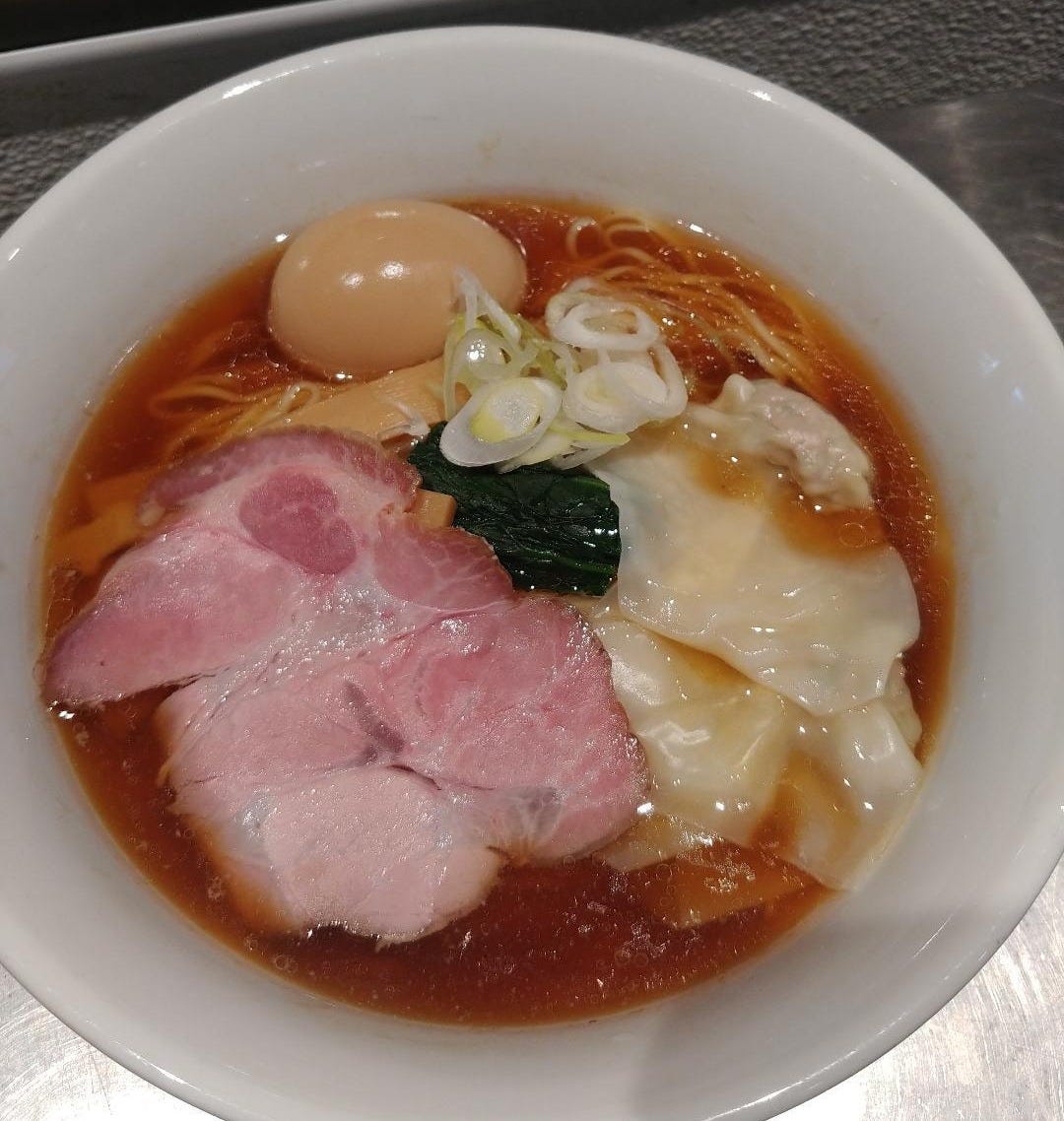
Mike and I have known each other for a while, ever since I interviewed him for Serious Eats in 2017. I’ve eaten at his popups over the years (always great), but I’d never eaten at his restaurant. The night before the event, I stopped by and had the signature bowl of miso, and it was very, very good—a super rich broth (he uses something like 70 g of miso tare in the bowl, which is quite a lot!), and every element in the bowl seems like a confident expression of what Mike likes in ramen—two kinds of beautifully cooked chashu (one shoulder, medium-rare, and the other rolled belly, cooked perfectly), some nicely crisp and seasoned menma, and these crazy wiry and chewy Sapporo-style noodles. I thought it was very tasty, but also really interesting—especially the noodles.
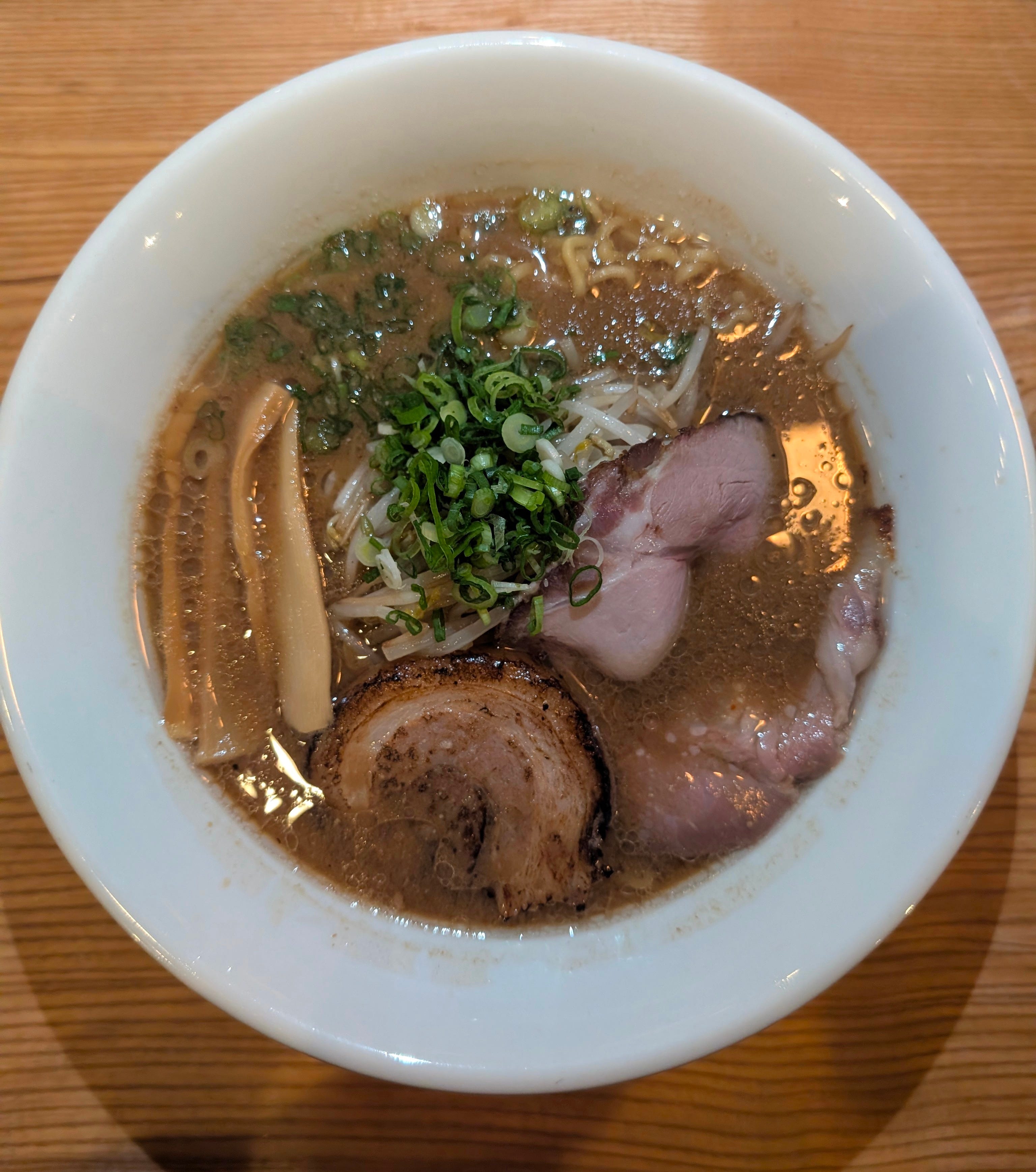
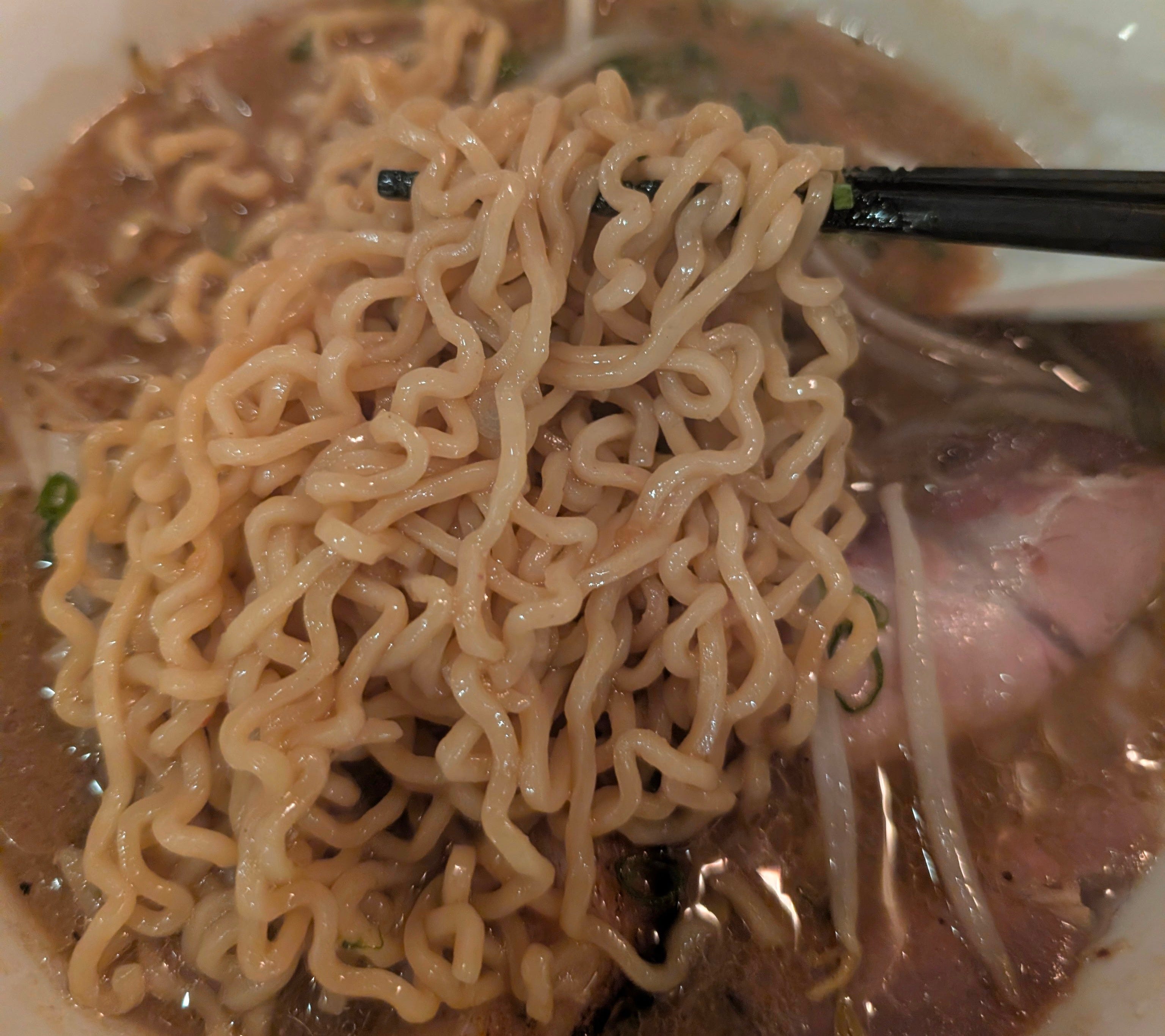
Eating Mike’s ramen in his beautiful shop was fun, but right after the meal I experienced a tsunami of anxiety. As I note in the book, it’s one thing to make a couple good bowls of ramen on a weekend; it is another thing entirely to try to serve 100 (or more, in most cases) bowls of ramen to paying customers. Mike was and is right to be confident about the quality of his ramen, but aside from helping out at Cafe Mochiko with some very basic service stuff (rinsing and folding tsukemen, making wontons), I’d never made any of my soup or tare recipes in a commercial kitchen, let alone for people paying $25 a pop for a bowl of ramen.
To hedge my bets, I’d decided against using one of the recipes from the book, choosing to showcase the (slightly absurd) recipe I’d developed for ChefSteps instead.
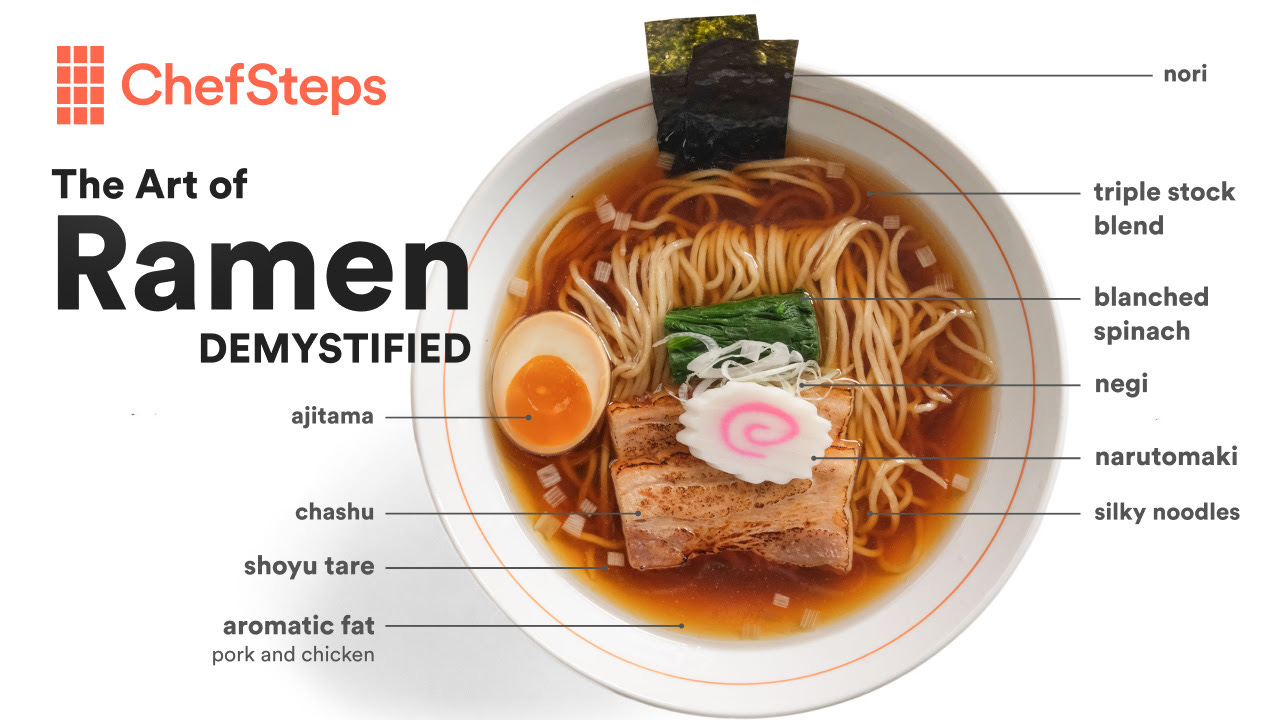
The recipe is now live on ChefSteps, and you can watch a lengthy YouTube video of the process, if you like. (It always helps to smash that “like” button if you actually like a video on YouTube, fyi.) And if you check it out, you can see why I’d pick it for a restaurant event over the ones in the book. The book recipes are meant to be as approachable as possible without sacrificing quality. The ChefSteps recipe is designed to produce the best shoyu ramen I am capable of, with just a few nods toward efficiency and convenience, like the relatively short pressure-cooking times for the stock.
Simply put, I knew that if we made the ChefSteps one for paying customers, I’d feel less anxious about what we were putting out.
The process I use for the stock was inspired by the methods used at Iida Shoten, a very famous ramen shop, which have percolated through some of the independent ramen shops stateside (like at Erik Bentz’s Cafe Mochiko and Scott LaChapelle’s Pickerel), in part because of the influence of Daisuke Watanabe, a former apprentice at Iida Shoten who runs an equally well-regarded shop in greater Tokyo, Ramen FEEL—Watanabe has become a sort of mentor for Bentz and LaChapelle (and others). It’s fairly work intensive: You make a pork stock, then fortify it with chicken, then take half of that stock and clarify it with lean chicken meat, after which you combine both the fortified stock and the clarified stock. Combine that combined stock with a little dashi, and you’ve got a stock that is incredibly flavorful—you could season it with salt and you’d have a pretty refined bowl of ramen.
Mike was a little taken aback by the weight of bones that go into the stock, but he was game. We made the pork stock overnight, then fortified it with chicken starting early Sunday morning, and clarified it just before service at 5 pm—and it was really beautiful, exactly like I make it in my home kitchen, but scaled up by a factor of 12. (The size of the stockpots in ramen restaurants is unnerving—stockvats, is more like it.)
We also used the exact same tare, just scaled up, and we used an identical process for the fat. So if you ate at the restaurant and want to replicate the soup exactly, all the details are right there.
From there, we diverged from the ChefSteps recipe: Mike was in charge of the chashu, the egg, and the menma; I did the spinach, naga negi, and wontons (all according to book recipes, although I grated a little yuzu zest into the wonton filling); and the noodles were a kind of joint effort consisting of Mike looking at one of my noodle recipes in the book, asking me questions about the qualities I was looking for (slippery, swimm-y, a little bouncy, thin, straight), and then just…executing it, guided by experience and intuition.
And these noodles were incredible, exactly what I wanted, exactly what I described. I had been a little worried because Mike’s preferences for noodles are so drastically different than mine; he likes them a little firm, almost al dente, and he loves the idea of “fighting with the noodles” as you’re chewing them. After eating his Sapporo miso, I genuinely wondered if the style of noodles I like was going to be a challenge for him to make. And yet, he made my style of noodles perfectly!
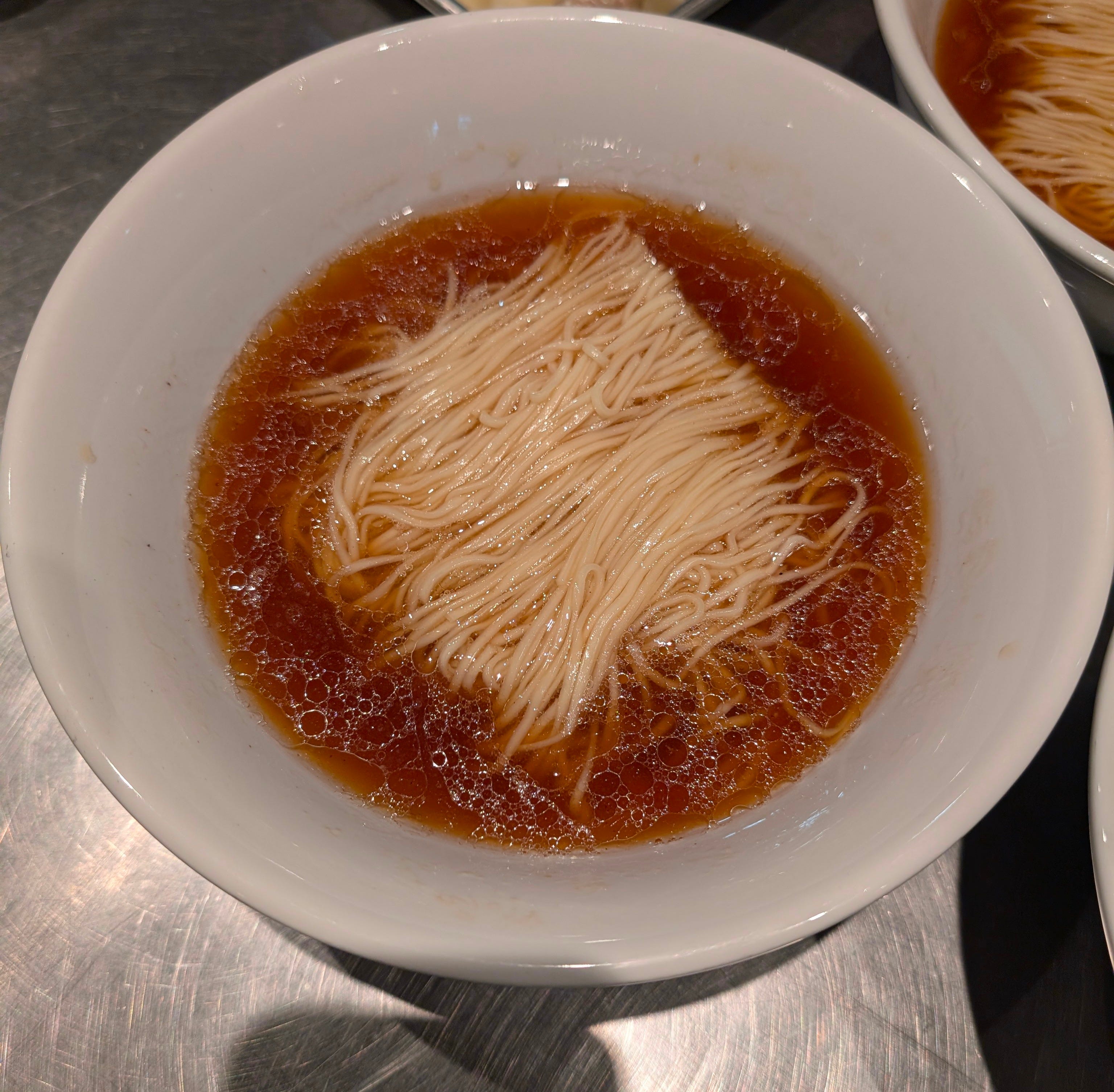
(There is something interesting to note, here. One of Mike’s objections to the noodles he made for the event is that, because of their thinness, and their texture, cooking them for the time I liked was actually bad for most people who patronize the shop, and this is because, by and large, they won’t crush the bowl of ramen in five to 10 minutes—standard for ramen geeks. The longer it takes to eat the bowl of ramen, the more blown out the noodles get, which is why undercooking noodles a little is his preference. I made the call to just cook them so that they’re just right when the bowl gets set down, but in retrospect, in light of how long people sat with their bowls of ramen, I totally see his point.)
(That said, I want to also take a moment to tout the noodles in the ChefSteps shoyu. They’re my attempt at mimicking (some of) the noodles Erik made at Cafe Mochiko. It’s not just because I think they’re quite good; the dough is very easy to work with, and it’s quite versatile—I wish I’d been able to include them in the book, but I simply wasn’t as good at making noodles two years ago, when all the recipes were written.)
We also offered a “b-side” bowl, which was basically just Mike doing a really creative riff on the super soup. He made the miso tare and the milk-braised chashu from the book, and while we were talking about the chashu, I noted that the book recipe is a little odd in that it doesn’t make use of the curdled milk solids that form in the braising liquid (which are one of the best parts of the original Marcella Hazan recipes for milk-braised pork). Mike decided to blitz the milk solids with some of the rendered fat and all the jammy aromatic vegetables from the braise, and he ladled a little of his emulsified sauce into each bowl along with the tare. Such a great idea, and with his crinkly Sapporo noodles, it was such a cool bowl to serve alongside the shoyu.
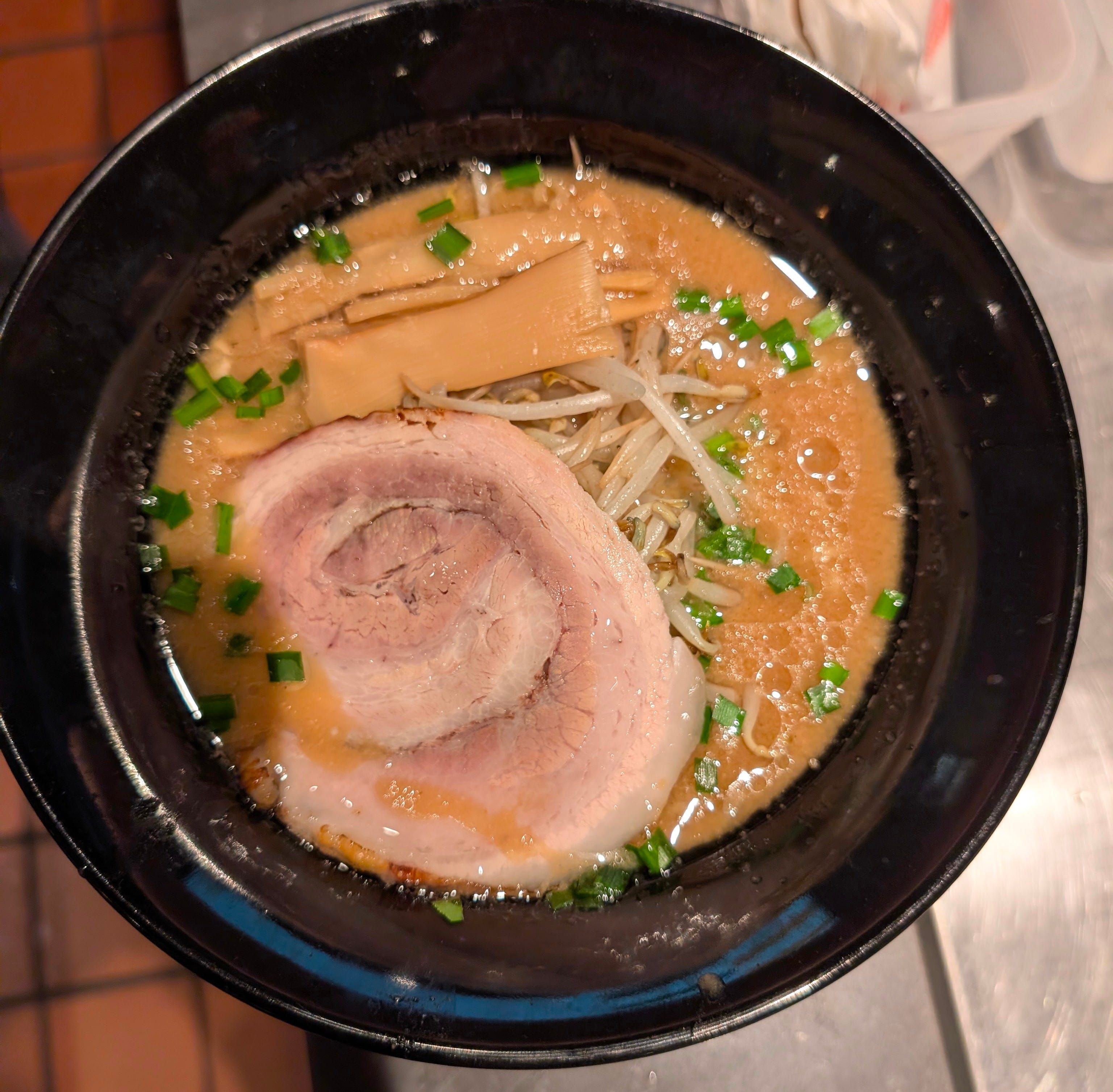
The people who attended seemed to like theramen, which was nice, and everyone I spoke to seemed genuinely interested in the book and the ramen—I even met a couple noodsletter subscribers! (Thank you!) All in all, an amazing experience that also made me appreciate how much work and thought go into running a ramen shop. I can’t thank Mike and his wonderful Akahoshi crew (or any of the attendees!) enough.
Get 35% off ChefSteps Studio Pass
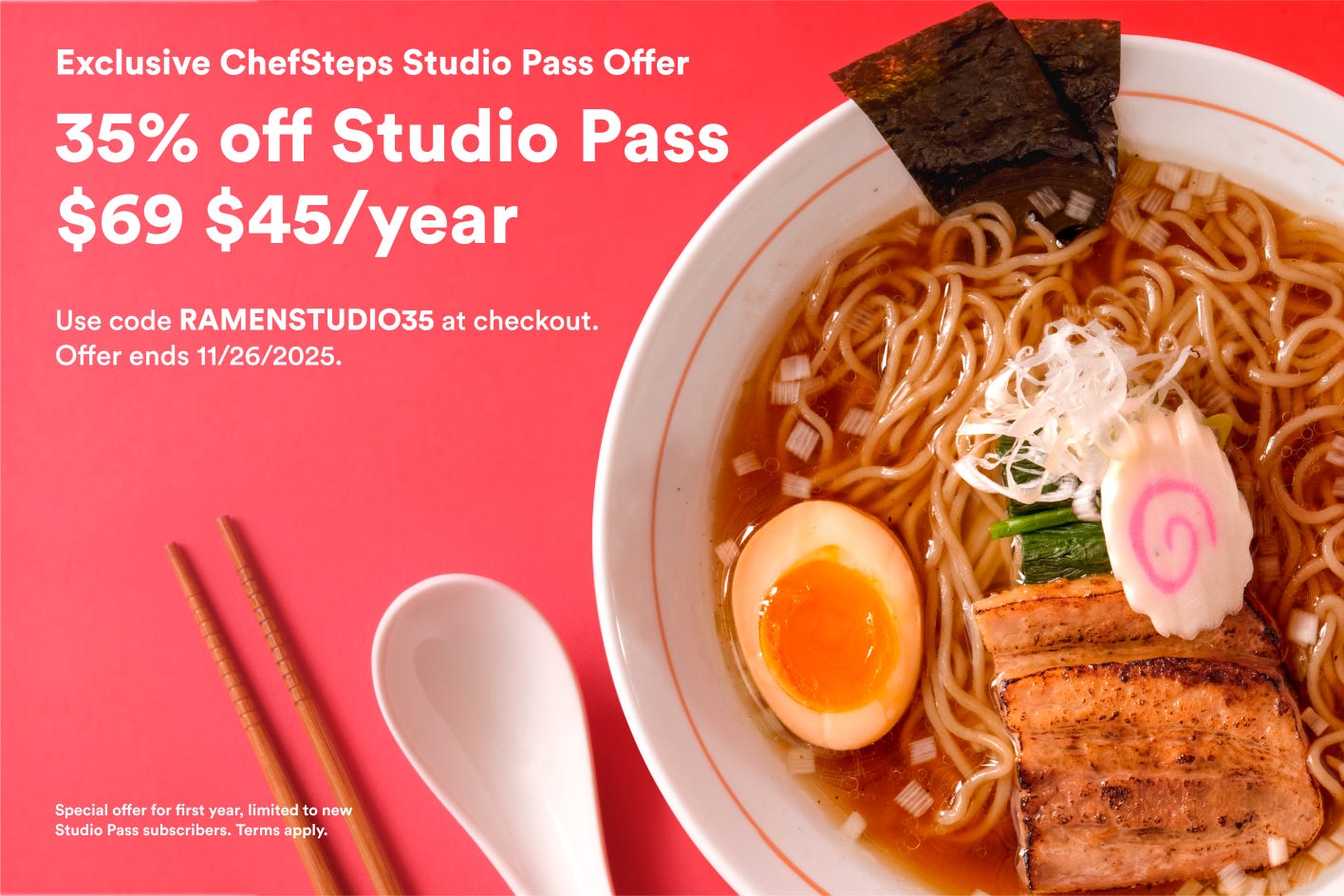
So, if that super soup shoyu piques your interest, and you want to take a look at all the recipes, you should sign up for Studio Pass!
We’ve turned on our 14-day free trial again, so you could take a gander that way. But if you think you want to actually pull the trigger, from now until 11/26 you can get 35% off for the year if you use the code RAMENSTUDIO35 at checkout. (We’re running a 30% sale for Thanksgiving, so that’s an extra 5% for ramen lovers!)
I can’t even remember the last time I listed new stuff we’ve published in noodsletter, but we’re always chugging away, putting up crazy good recipes, some bonkers (like the ramen), others just perfectly done (like Sasha Marx’s recent Roman pastas package and Nicholas Gavin’s doughnuts and…okay, everything else). I’ll just list the non-ramen recipe names for the last couple months? It’s really quite a lot! (And such range!)
And in addition to having the most detailed (and best! best!) recipes, you know what the coolest part of ChefSteps is? There aren’t any ads! Look at all that white space!
Charred Zucchini With Green Tahini Dressing
all these noodles look so yum
Such incredible ramen and such a fun event!! It was really wonderful seeing you!!! <3 Go Sho go!!!!